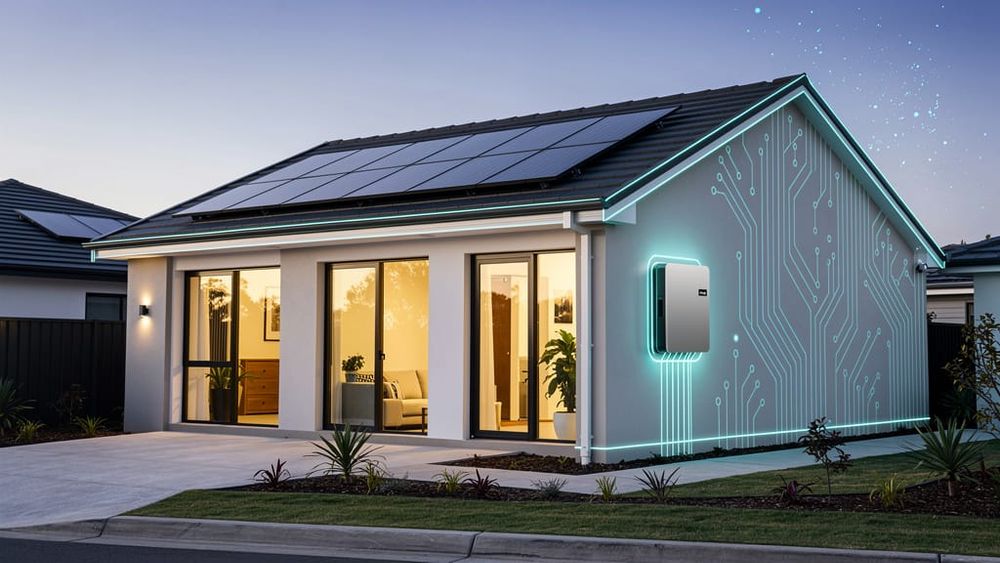
A growing number of home batteries and smart thermostats are being quietly stitched together into something that looks, from a utility's control room, like a single large power plant. Homeowners who join in are getting paid for it, and the reason it's happening now has a lot to do with how much power AI data centers are pulling from the grid.
How a Neighborhood Becomes a Power Plant
The setup is called a virtual power plant, or VPP. Instead of building one large facility, a utility or energy company links together thousands of home batteries, smart thermostats, and EV chargers so they can be dispatched together during moments of high demand. When the grid is under strain, a VPP can pull a little stored power from thousands of homes at once, or briefly ease thermostats and EV chargers, without anyone losing power at home.
This approach enrolled about 38 gigawatts of capacity nationwide in 2025, a meaningful jump from the year before, and residential battery participation alone grew sharply as more solar-plus-storage customers were offered a spot. Some of the largest recent commitments, including a joint effort from Sunrun, Tesla, and Renew Home, aim to coordinate home batteries alongside more than eight million smart thermostats to help utilities and large tech companies manage load without building new power plants.
Part of what's driving this is data centers. AI computing has pushed electricity demand up faster than utilities can build new generation and transmission, and a single large data center can add a significant jump to a utility's total demand. Aggregating flexible home devices is proving to be a faster, cheaper way to absorb some of that pressure than waiting years for a new power plant or transmission line to get built.
The Hardware Stack:
Tesla Powerwall: A home battery frequently enrolled in VPP programs, capable of being dispatched remotely in small amounts during peak demand events.
Renew Home: A smart thermostat and demand-flexibility platform that aggregates connected thermostats across millions of homes into a coordinated grid resource.
Sunrun: A solar-plus-storage installer that enrolls its residential battery customers into VPP programs and shares the resulting grid payments with them.
Vulnerability Score
No VPP enrollment: A home battery that isn't enrolled in any demand-flexibility program is producing zero income beyond backup power, even in a state where that option is available.
No compatible hardware: Older thermostats and battery systems without cellular or Wi-Fi connectivity generally can't participate, since dispatch depends on a two-way internet connection.
No visibility into eligibility: Utility VPP programs vary significantly by state and utility territory, and many eligible homeowners simply don't know a program exists where they live.
What This Means for a Homeowner Weighing a Battery
None of this changes the core reason most people install a home battery, which is backup power during an outage. But it does change the math on the investment. In roughly half of US states, a battery is no longer just an insurance policy sitting quietly in the garage, it's also periodically working, earning several hundred dollars or more a year by lending a small amount of stored power to the grid.
For anyone shopping for a battery, it's worth asking the installer directly whether local VPP programs exist and whether the specific battery model qualifies, since that answer can meaningfully change the payback timeline on the whole system.