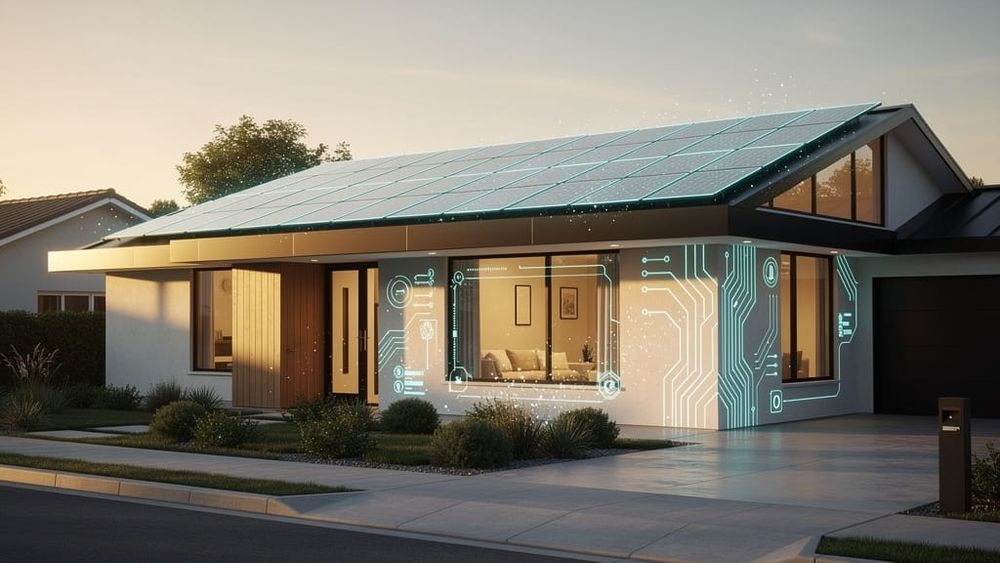
A roof full of working solar panels does not automatically mean a house with power during an outage. Plenty of homeowners have discovered this on a sunny afternoon with the grid down and their own array sitting idle above them. The reason comes down to what kind of inverter is between the panels and the panel board.
Sponsored by Brownstone Research
Help automate your dream retirement
Editor's Note: Former tech executive Jeff Brown picked Nvidia in 2016. It's up 25,155% since. He recommended Bitcoin at $240. It's up 31,219% since. And he's been ahead of the curve on Elon Musk's businesses for over a decade. In fact, he was one of the first to predict SpaceX's IPO. But today, he says this goes beyond SpaceX. Elon is building something even bigger. And you can get in right now, on the ground floor. Click here for the details or read more below.
Dear Reader,
Imagine having an AI agent…
Whose only job is to generate stock market profits, over and over again.
While you sleep…
While you golf…
While you spend time with your grandkids…
It could be making money in the background.
Your dream retirement — automated...
The AI agent generates the profits for you.
Well, this is no longer a science fiction fantasy…
Elon Musk thinks he’s pulled it off.
In the short term, Musk has said it’s “not impossible” to see his AI agent return 70 times the investment.
If he’s right… just $15,000 invested in Elon Musk’s AI agent — would make you a millionaire.
You don’t need to be tech savvy at all.
Anyone can do this… young or old.
You won’t have to program anything or even download an app or anything like that.
It requires just one simple move by you.
And Musk’s AI agent does the rest.
You set how much you want to invest.
It could be as little as $100…
And you can sell and cash out, any time you want.
Now here’s what’s even better:
You can sign up for Musk’s AI agent today.
Former tech executive Jeff Brown will walk you through it.
He’ll even give you a live demo of Musk’s new AI agent.
Regards,
Chris Hurt
Host, Elon Musk’s 70X AI Agent.
Following the Beat Versus Setting It
An inverter converts the direct current from solar panels or a battery into the alternating current a house runs on. To do that, it has to produce a waveform at the right voltage and frequency, and it has to decide where that reference comes from.
A grid-following inverter takes the reference from the utility. It listens to the waveform coming down the line and pushes current in step with it. This works well and it is how most residential solar has been built. It also means that when the utility waveform disappears, the inverter has nothing to synchronize to and shuts down. That behavior is deliberate, since an inverter feeding power into a line that a repair crew believes is dead would be dangerous, but the practical result is a dark house under working panels.
A grid-forming inverter generates the reference itself. It sets the voltage and frequency rather than copying them, which means it can run an isolated section of wiring with no utility present. That is what makes islanding possible: the system disconnects from the grid at a transfer point and keeps the house energized on its own.
The certification that matters here is UL 1741 SB, which incorporates the test procedures from IEEE 1547.1 and covers the grid-support functions in IEEE 1547-2018. Whether your jurisdiction requires it depends on local adoption, and utilities are moving at different speeds.
One caveat worth knowing: a grid-forming inverter on its own is not a backup system. Islanding also needs a transfer point that physically separates the house from the grid, protection logic, and in nearly all cases a battery to smooth the gap between what the panels make and what the house draws. Sun alone is too variable to hold a stable island.
The Hardware Stack:
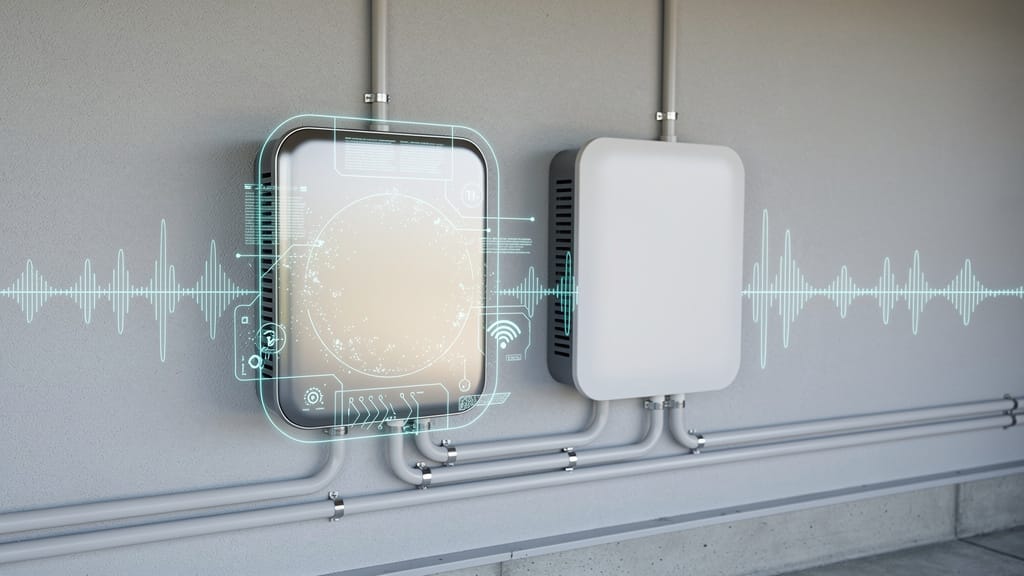
Tesla Powerwall 3: Combines the battery and a solar inverter in one unit and forms its own island through the Backup Gateway when the utility drops.
Enphase IQ8 Microinverters: Grid-forming at the panel level, able to run daytime loads directly from sunlight through a system controller even without a battery attached.
SolarEdge Energy Hub with Backup Interface: A hybrid inverter that handles both solar and storage and switches the home onto its own supply during an outage.
Vulnerability Score
Idle generation: Solar without grid-forming capability and a transfer point produces nothing during an outage, no matter how much sun is falling on the roof.
No transfer point: A system without an automatic transfer switch or gateway cannot legally or safely separate from the utility, so it must shut down whenever the line does.
Unbuffered supply: Panels alone swing with cloud cover. Without storage to absorb that, an island is unstable and the system will drop loads.
The Question to Ask Before You Buy
If backup power is part of why you are considering solar, the specification to look for is not panel wattage. It is whether the inverter is grid-forming and whether the quote includes the gateway or transfer switch that lets the house separate from the grid.
Retrofitting this later is possible but rarely cheap, because it usually means replacing the inverter rather than adding to it. If you already have solar and have never tested what happens during an outage, that is worth finding out on a calm day rather than during a storm. The answer is usually in the inverter model number and one line in the original permit package.
Written by Mason Vance
Forget SpaceX, this is Elon’s Next Breakthrough (Sponsored by Brownstone Research)
BlackRock CEO’s Crazy Prediction (Sponsored by Brownstone Research)
You’re paying for all this… [unless you own gold the RIGHT way] (Sponsored by Golden Portfolio)
SpaceX: Elon Musk’s ‘Trojan Horse’ (Sponsored by Altimetry)
Could Trump Explode Your Wealth? (Sponsored by Awesomely)