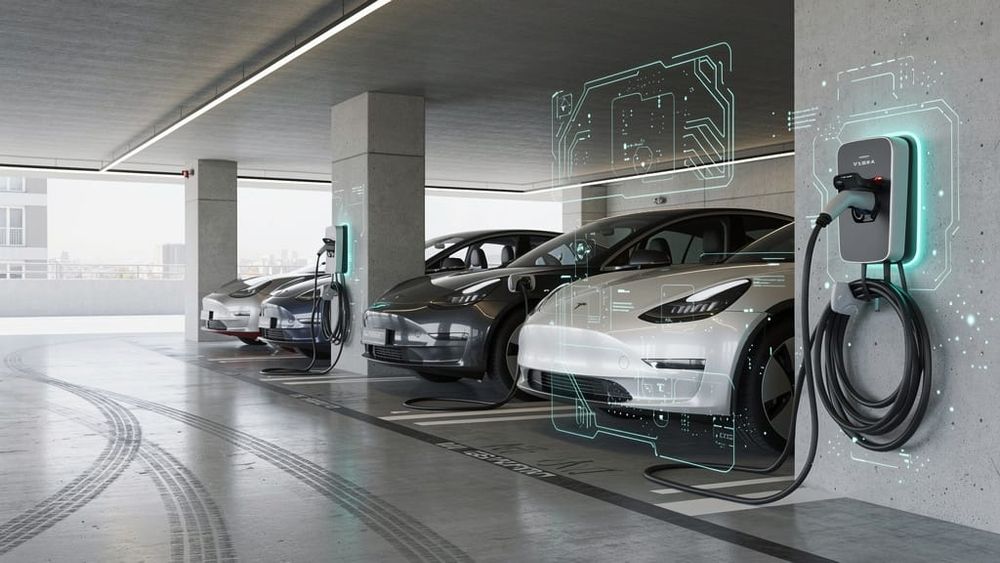
Home charging has always been one of the biggest advantages of owning an EV, and one of the biggest reasons renters have been slower to make the switch. That gap is starting to close as apartment and condo properties treat EV charging less like a niche amenity and more like a standard utility, on par with parking itself.
The Gap That's Finally Getting Attention
Roughly one in five Americans live in apartments, yet only about 5 percent of US multifamily properties currently offer on-site EV charging, a shortfall that's been one of the clearest structural barriers to broader EV adoption. Survey data shows a third of renters actively want charging access, and well over half say they'd be more likely to buy an EV if their building offered it, some even saying they'd pay more in rent for it.
That gap is now attracting real investment. A partnership between ChargePoint and OBE Power announced plans to deploy roughly 2,500 charging ports across multifamily properties starting in 2026, one of several efforts specifically targeting this underserved segment. Utilities in a number of states have also started funding multifamily charging installations directly, and updated building codes effective in 2026 increase requirements for EV-ready electrical infrastructure in new multifamily construction, meaning new apartment buildings increasingly have to be built with the underlying wiring in place even before chargers themselves are installed.
For a property manager, the shift is being driven by simple economics: on-site charging access is turning into a factor renters weigh alongside amenities like in-unit laundry or a fitness center, and a building without it risks losing renters to a comparable property that has it. For a renter, it means the historical assumption that EV ownership requires a private garage is becoming outdated faster than most people realize, particularly in newer buildings or properties actively competing for tenants.
The Hardware Stack:
ChargePoint: A major EV charging network provider partnering to deploy thousands of new charging ports specifically at multifamily residential properties.
Flo: A charging equipment and network provider commonly used in multifamily and shared-parking EV charging installations.
EV Connect: A charging management platform used by property managers to handle billing, access, and charger administration across multi-tenant properties.
Vulnerability Score
No charging access as a renter: A renter without on-site charging access typically has to rely on slower public charging, adding meaningful inconvenience compared to a homeowner charging overnight in their own garage.
No EV-ready infrastructure in older buildings: Many existing multifamily properties lack the underlying electrical capacity to support charger installation without a significant infrastructure upgrade first.
No awareness of funding programs: Property managers unaware that utilities in their state are funding multifamily charging installations may assume the cost burden falls entirely on the property, when it often doesn't.
What This Means for Renters and Property Owners
For a renter considering an EV, checking a building's current or planned charging access is now a reasonable part of that decision, in much the same way parking availability has always mattered. For a property manager or owner, multifamily EV charging is shifting from a rare differentiator to something closer to a baseline expectation, particularly as new buildings are already required to be EV-ready from the start.
Anyone managing a multifamily property considering an installation should check directly with the local utility about available funding programs before assuming the full infrastructure cost falls on the property alone.
Written by Mason Vance