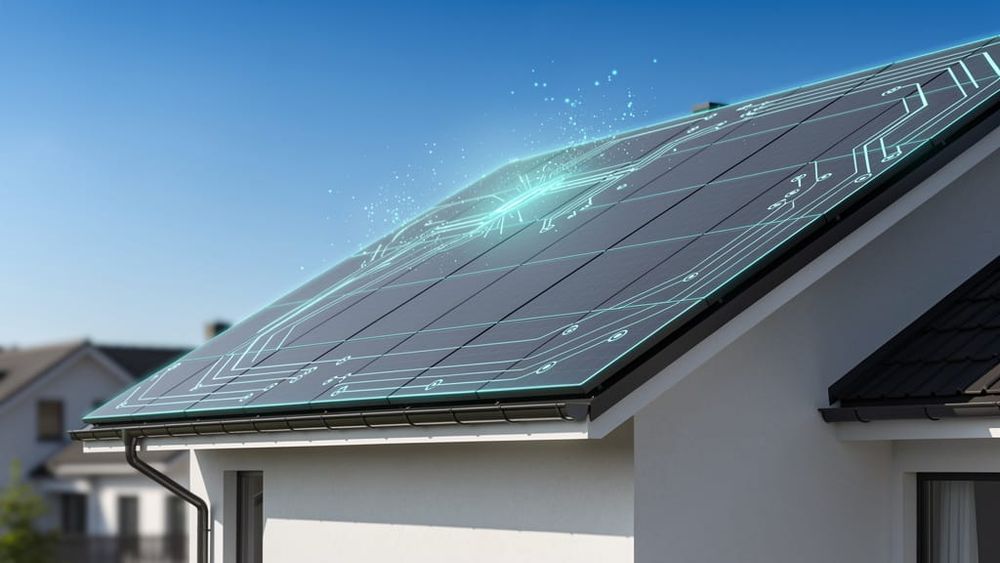
The solar panels going onto roofs in 2026 convert noticeably more sunlight into usable power than the panels sold just a few years ago, without costing dramatically more. The improvement is coming from a shift in the semiconductor layer inside the panel, not from making the panels bigger or adding more of them.
Sponsored by Porter & Co
Something strange is happening to your money.
It wasn't voted on. It wasn't debated in the Senate. And most Americans have no idea it's even taking place but…
President Trump is replacing the U.S. dollar.
Not with crypto. Not with a digital currency. Something far bigger than that – and it's already been signed and sealed in the back rooms of D.C., ready to be issued by the U.S. Treasury.
Bypassing every legal and political channel under the guise of "national security," Trump has enacted this total money reset using a landmark executive order (1421).
Whether you’re a Democrat or Republican, whether you support this new money or not, it doesn't matter.
Soon, every U.S. citizen will be forced to use Trump's New Dollar to fill their gas tank, buy groceries, and pay medical bills.
Which is why I've produced a critical new documentary laying out exactly what Trump's New Dollar means for your savings, your investments, and your family's financial future.
Detailing three important steps you can take today to prepare – including the name of a core band of assets connected to Trump’s initiative that could surge as a result.
As you’ll see in my briefing, the last time America reset its money like this – under Richard Nixon’s presidency in the 1970s – it created one of the greatest wealth divides in the history of our nation.
On one side, it minted an average of 1,300 new millionaires a day for over half a century. And on the other… the folks left behind, drowning in debt, with no idea how to use America’s new money to create wealth.
As Trump rolls out his new dollar, the question is:

Good investing,
Porter Stansberry
PS. If you’re wondering what Trump’s new money will look like, when it will be issued, what it means for your investments – all of those questions are answered in my briefing.
What's Actually Changed Inside the Panel
Most residential solar panels for years relied on a cell design called PERC. The newer standard replacing it, called TOPCon, adds a thin tunnel oxide layer and a polysilicon contact on the back of the cell, which cuts down on a specific type of energy loss called recombination, essentially electricity that gets lost as heat before it can be captured. The practical result is commercial panels now regularly reaching the low-to-mid twenties in efficiency percentage, up from panels that plateaued in the high teens and low twenties just a few years earlier.
A second technology, bifacial panels, captures sunlight that reflects onto the back side of the panel as well as the front, which can meaningfully boost total output depending on the surface a panel is mounted over, such as a light-colored roof or reflective gravel. Neither of these technologies requires a fundamentally different installation process, so a homeowner shopping for solar today is likely being quoted TOPCon, bifacial, or both without necessarily realizing it's a meaningfully different product than what was standard a few years back.
A more experimental technology, perovskite tandem cells, has already shipped in limited utility-scale projects and pushes efficiency even higher by stacking two different light-absorbing layers on top of each other. It isn't yet available for home installations and likely won't be widely offered to homeowners for another year or two, but it signals where the technology is headed next.
The Hardware Stack:
Jinko Tiger Neo: A TOPCon-based residential solar panel representing the current generation of higher-efficiency silicon panels available for home installation.
LONGi Hi-MO: A high-efficiency bifacial and TOPCon panel line used in both residential and larger installations.
SunPower Maxeon: A premium residential solar panel line frequently cited among the most efficient panels currently sold for home use.Vulnerability Score
Vulnerability Score
Older panel technology: A home with an existing PERC-based solar system installed several years ago is generating meaningfully less power per square foot of roof than a new TOPCon installation would in the same space.
No bifacial consideration: A south-facing roof over a light-colored surface may be leaving extra, essentially free output on the table if the installed panels aren't bifacial.
Outdated efficiency assumptions: A homeowner comparing quotes using efficiency numbers from a few years ago may unfairly discount a newer, genuinely more efficient panel as overpriced.
What This Means for Anyone Comparing Quotes
None of this means an older solar system needs to be replaced, existing panels will keep producing power reliably for years. But for anyone installing solar for the first time, or expanding an existing system, it's worth asking directly whether a quote includes TOPCon or bifacial technology, since the efficiency difference can affect how many panels are actually needed to meet a home's energy goals.
The technology curve here is still climbing, and today's mainstream panel is very likely not the best a homeowner will be able to buy again in a few years. That's a reasonable thing to factor into timing a purchase, without needing to wait indefinitely for the next improvement.
Elon's Next IPO... a Flop? (Sponsored by Awesomely)
What is Trump’s decade-long obsession? (Sponsored by Omnia Research)
Every American Must See This Before “Disclosure Day” (Sponsored by Brownstone Research)
This 50-year dollar agreement just ended quietly… (Sponsored by Golden Portfolio)
America’s answer to universal basic income (Sponsored by Freedom Financial Research)
The Pentagon got nervous (Sponsored by Freedom Financial Research)