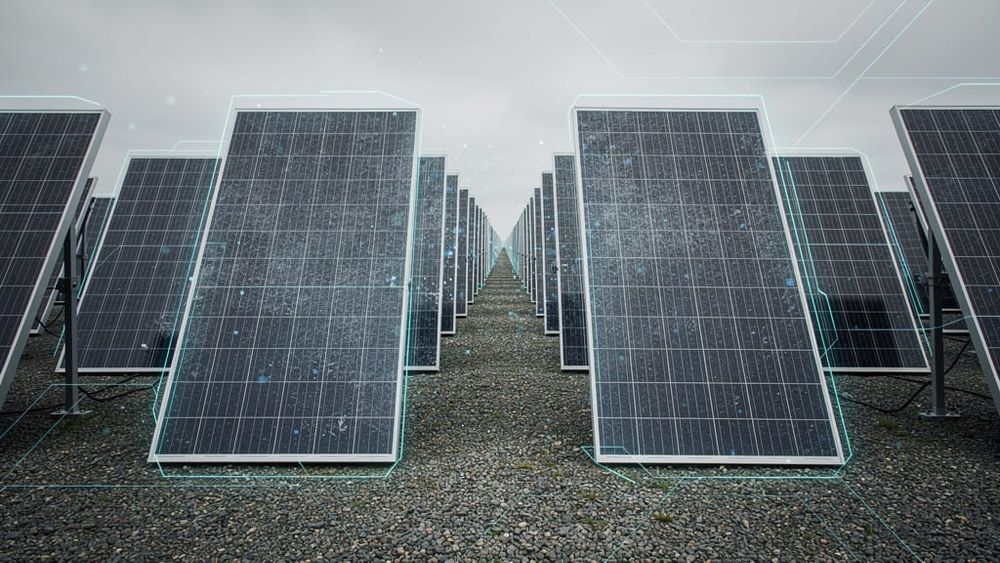
A residential array installed today comes with a twenty-five year production warranty and will probably outlast it. That still puts a date on the calendar, and the question of what happens to the modules on that date has a less settled answer than the rest of the industry's paperwork suggests.
Sponsored by Millionaire Media
Washington Is Squeezing Chinese Drones. Who Wins?
Dear Reader,
Here’s a problem Washington can’t ignore anymore:
America depends heavily on Chinese-made drones.
Think about that.
Drones are becoming essential for soldiers, police departments, border security, emergency crews and critical infrastructure...
Yet a huge part of the supply chain runs straight through America’s biggest strategic rival.
That’s why Washington is now pushing hard to reduce reliance on Chinese suppliers—and build a homegrown drone industry FAST.
Most traders will hear that and chase the obvious billion-dollar defense names.
Not me.
I’m looking where I always look: tiny, overlooked companies where one serious catalyst can change the entire story.
And I’ve found an emerging sub-$5 American drone maker that appears to be sitting directly in the path of this shift.
Its technology has been tested by U.S. soldiers. It has competed for Army business. It was invited into the Pentagon’s Drone Dominance program. And Bloomberg reports the Air Force agreed to buy its interceptor drones.
Incredibly, this public company is trading below $5.
That disconnect is exactly what caught my eye.
[See the tiny American drone play I’m watching >>]
Wishing you a prosperous future,
Tim Sykes
P.S. Washington doesn’t need a few American drones. It needs them by the thousands. That’s where this story gets really interesting. Watch my urgent broadcast here.
The Economics Are the Obstacle
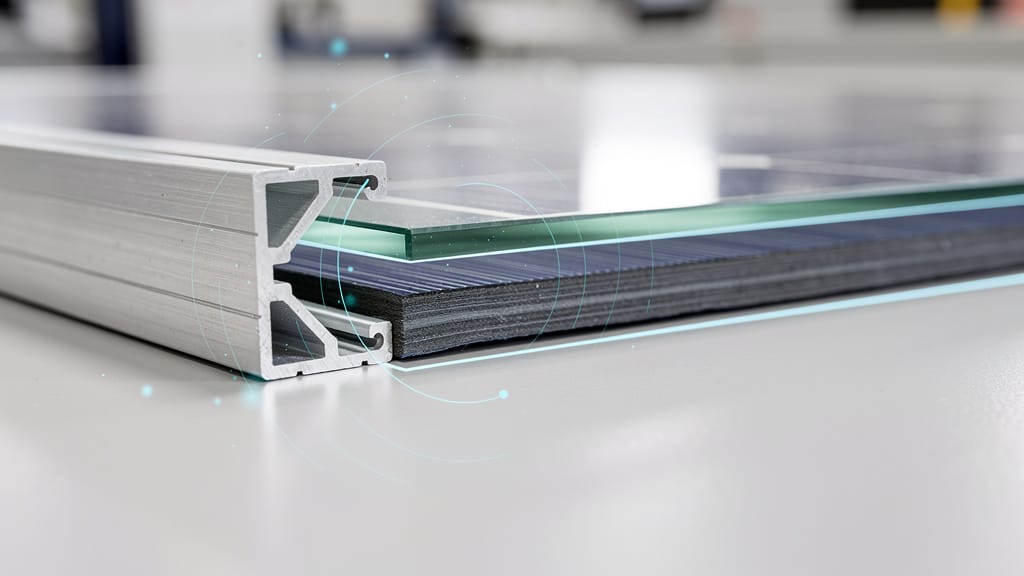
A module is mostly glass and aluminium, with a small amount of silicon, silver, and copper bonded into a laminate that is deliberately built not to come apart. That construction is what makes it last three decades on a roof and what makes it awkward to recycle.
The cost figures explain the behaviour. Recycling a utility-scale module in the United States currently runs somewhere in the region of fifteen to forty-five dollars per panel. Sending it to landfill costs roughly one to five dollars. The materials recovered are generally worth less than the cost of collecting, transporting, and processing the module, because silver and silicon are difficult to recover at purity high enough to sell.
The volumes are not small. The International Energy Agency's photovoltaic programme projects roughly 1.7 million tonnes of module waste by 2030 under normal retirement assumptions, rising to as much as 8 million tonnes if failures and early replacements run high, and around 60 million tonnes by 2050.
Regulation is uneven. Modules are not automatically classified as hazardous waste in the United States, but some can fail the federal leaching test for metals, which would make them hazardous in that specific case. A handful of states have passed their own stewardship or labelling rules, and more are considering them, so the disposal rule that applies to a panel removed in 2045 may not be the one that applies today.
There is a parallel market worth knowing about. Modules pulled during a repowering job are often still producing eighty percent or more of their rated output, and a secondhand trade exists for them. A twelve-year-old panel is not scrap, and in many cases it has more value as a working module than as recovered glass.
The Hardware Stack:
- Qcells Q.PEAK DUO Modules: A mainstream residential line, relevant because the manufacturer's own take-back and warranty terms are part of what you are buying.
- First Solar Series 7: Thin film modules backed by the industry's longest-running manufacturer recycling programme, which recovers a high share of semiconductor material and glass.
- SolarEdge Home Hub Inverter: Worth naming because the inverter will almost certainly need replacing before the panels do, which is the first end-of-life decision most owners actually face.
Vulnerability Score
Cost gap: Recycling costs several times what landfill costs and recovers less value than it consumes, which means the cheap path is the default path without a rule to prevent it.
Shifting rules: Disposal requirements are being written state by state, so the legal position twenty years from now is not the one on the books at installation.
Early retirement: Hail, water ingress, and repowering projects pull modules off roofs long before the warranty expires, which is what drives the high end of the waste projections.
What a Homeowner Can Actually Do
Ask about end of life at quote stage, and ask in a specific form: does the module manufacturer operate a take-back programme, and does the installer handle removal and disposal or subcontract it. Both answers are short, and an installer who has thought about decommissioning tends to be the same one who documents the rest of the job properly.
Keep the paperwork. Module model numbers, the installation date, and the inverter records are what a future recycler or secondhand buyer needs, and they are what a homeowner twenty years from now almost never has.
When panels do come off, ask whether they can be resold before asking how to dispose of them. For a roof replacement or a partial repower, a working module has a buyer. For a storm-damaged one it does not, and then the question is whether your state has a stewardship programme and whether a regional recycler takes residential quantities. Both answers are improving year on year.
Written by Mason Vance
The Coffee Company Quenching a $250B Market’s Thirst (Sponsored by Green Coffee Company)
Any discussion of securities, assets, or financial markets in this email is for informational context only and does not represent investment guidance of any kind.