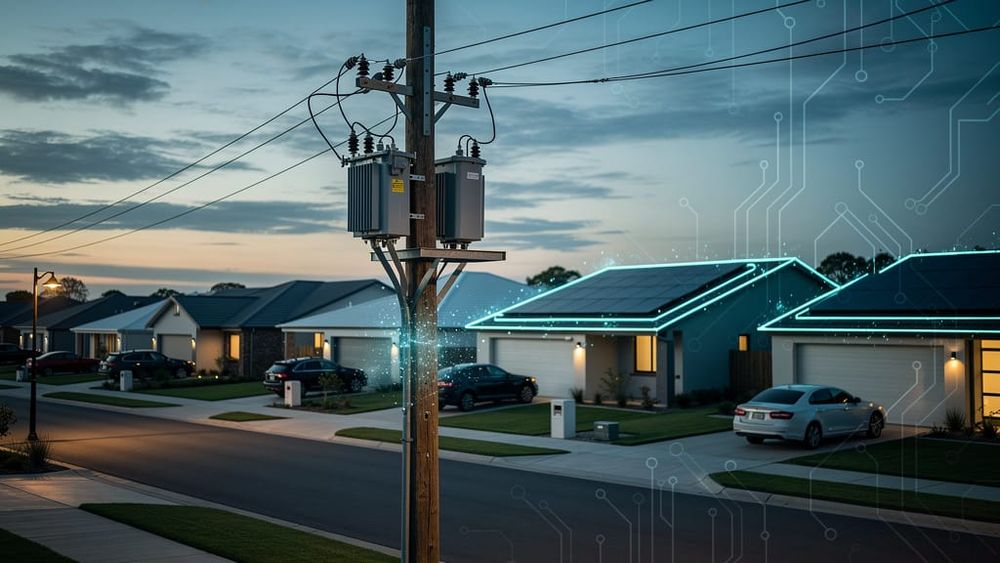
A distribution transformer, the gray metal box on a utility pole or the green pad in a yard that steps grid power down to household voltage, used to be a part utilities kept in stock. Today it can take a year or more to get a new one, and that quiet shift is starting to show up in homeowners' lives in a few specific ways.
Sponsored by Porter & Co.
My name is Porter Stansberry.
I'm the founder of one of the largest independent financial research firms in the world. Over the last 30 years we've helped hundreds of thousands of Americans navigate almost every major economic cycle.
We've been on the forefront of every big financial story – from the collapse of Fannie Mae and Freddie Mac to the rise of Bitcoin, the COVID inflation surge, and the artificial intelligence revolution.
But today, I need to expose a story the likes of which we haven't seen in half a century.
In fact, the last – and only – time this happened was 1974. A secret deal struck in a Saudi desert that quietly determined the financial fate of an entire generation of Americans.
It created extraordinary wealth for some, while casting millions more into relative poverty.
Now, 52 years later, it's happening again.
And as you'll see, the aftershock of this event could reset not just your personal wealth, but the entire foundation of the U.S. dollar.
How you save, how you invest, how you protect everything you've built… it's all being reshaped by what Fortune calls "the biggest change to the world's relationship with the dollar" in a generation.
Yet almost nobody is prepared for it.
So if you've been watching the chaos of the past year unfold, struggling to make sense of it all – you're about to get the answers you've been searching for.
Everything from the government taking direct equity stakes in tiny mining companies… to Trump's obsession with Greenland… his strange deals with Elon Musk, Jeff Bezos, Sam Altman and Mark Zuckerberg… the re-opening of shuttered nuclear plants… and a $12 billion stockpile of obscure metals most Americans have never heard of…
It's all deeply and inexorably connected to an inescapable fact no-one has prepared you for:
Trump is replacing the dollar.
His shocking money reset has bypassed all conventional channels – enacted instead through a series of executive orders, bi-lateral deals and a landmark treaty signed by 13 nations in December 2025 (barely reported in the press) called Pax Silica.
You need to know that the financial decisions you make in the face of Trump's New Dollar could dictate whether you're enriched, or quietly impoverished by the seismic shift already underway.
The stocks to buy. The assets to avoid. And the critical moves our research indicates you should make to ensure you and your family end up on the right side of this once-in-a-generation wealth divide…
It's all laid out here for you in my important new briefing.
Good investing,
Porter Stansberry
Why the Wait Got So Long
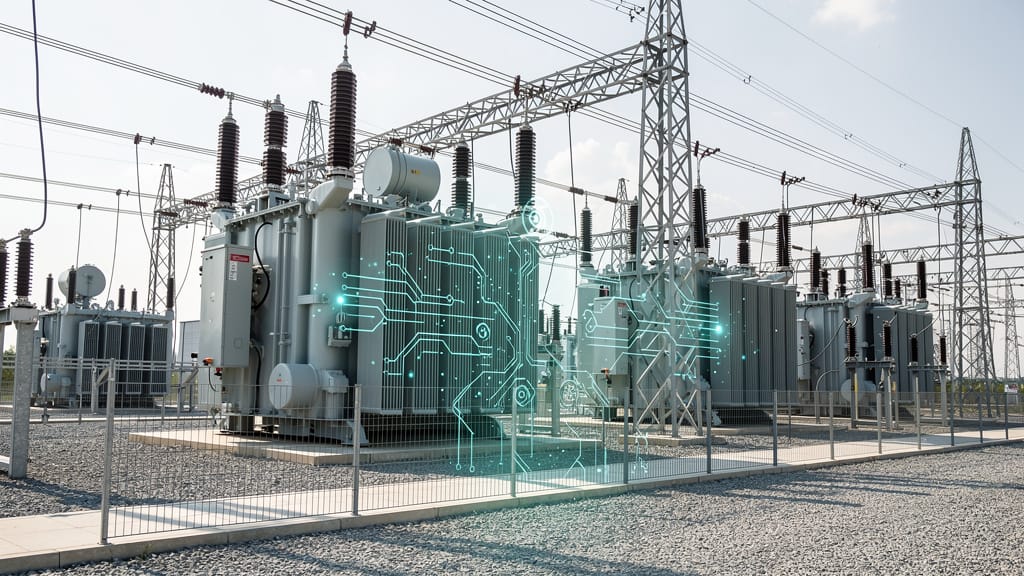
Demand for transformers has climbed sharply since 2019, driven by a combination of an aging grid needing replacement parts, a surge of new solar and battery projects waiting to connect, and rapidly growing electricity use from data centers and electrified homes. Manufacturing hasn't kept pace. Factories that build the specialized steel cores and copper windings inside transformers are largely running at full capacity, with little room to absorb the extra demand.
The result is a lead time that has stretched from a matter of months before 2020 to well over a year for many distribution transformers today, with larger substation-class units often taking two to four years. For a homeowner, this shows up in two practical ways. First, if a neighborhood transformer fails during a storm or simply wears out, the utility may not have a replacement sitting on a shelf, which can turn what used to be a same-day repair into a multi-day outage. Second, anyone requesting a service upgrade, for a larger EV charger, a heat pump conversion, or a new home addition, may find the utility itself is the bottleneck, not the electrician.
This is one of the quieter reasons interest in home batteries and backup generation has grown. A home battery doesn't fix a slow utility supply chain, but it does mean a homeowner's day-to-day comfort during an outage no longer depends entirely on how quickly a utility can source a part it may not have.
The Hardware Stack:
Generac PWRcell: A home battery system frequently installed specifically to bridge gaps left by aging or slow-to-repair utility infrastructure.
Span Panel: A smart electrical panel that lets a home prioritize which circuits stay powered during an extended outage, useful when repairs take longer than expected.
Tesla Powerwall: A widely installed home battery that can automatically island a home from the grid when utility power drops, independent of how long a utility repair takes.
Vulnerability Score
No local transformer redundancy: Many neighborhoods are served by a single distribution transformer, so its failure affects every home on that line until a replacement is available.
No backup power at home: Without a battery or generator, a home's ability to keep power on during an outage depends entirely on how quickly the utility can respond, which is no longer guaranteed to be fast.
No awareness of upgrade timelines: A homeowner planning an EV charger or panel upgrade who assumes it will be quick may not realize the utility-side portion of that request can now take significantly longer than the electrical work itself.
What This Means for Anyone Planning an Upgrade
None of this means the grid is in crisis, utilities are actively investing in more domestic transformer manufacturing capacity, and the shortage is expected to ease over time as that capacity comes online. But for now, it's a real, practical factor.
Anyone planning a major electrical upgrade, or simply relying on the grid for backup during outages, should ask their utility directly about current timelines rather than assuming a quick turnaround. And for homeowners already considering a battery or generator, the transformer shortage is one more reason that decision has become less about convenience and more about practical independence from a supply chain that's currently stretched thin.
A Charles Dickens Situation (Sponsored by Porter & Co.)
Is this the best kept secret in the stock market right now? (Sponsored by Omnia Research)
This tiny piece of glass could be bigger than GPUs (Sponsored by Brownstone Research)
The system holding the dollar together is gone… (Sponsored by Golden Portfolio)