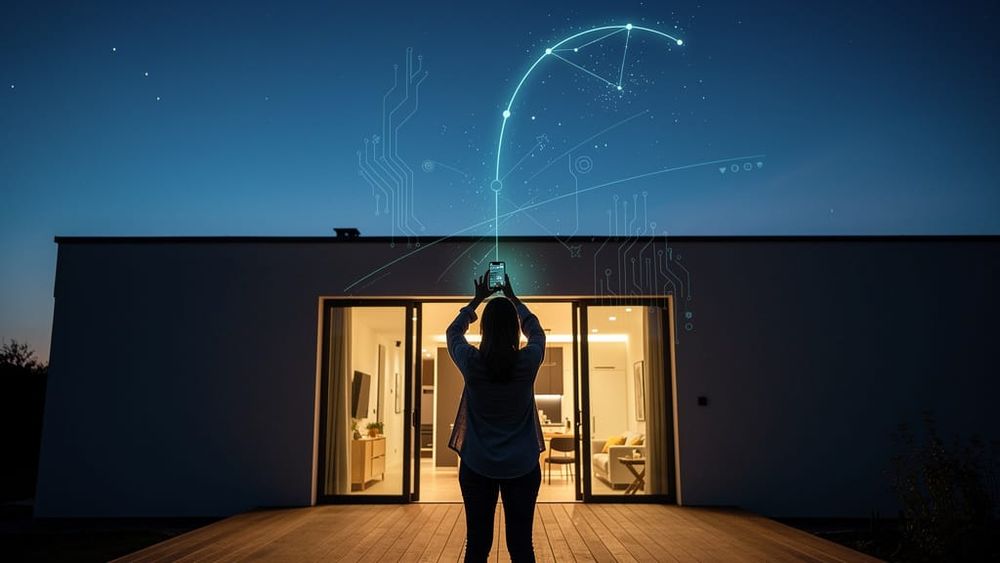
Most smartphones sold in the last four years can send a text message through a satellite when there is no cell tower in range. On T-Mobile it is included with the higher-tier plans and costs $10 a month to add elsewhere. Emergency texting to 911 over satellite works on compatible phones even without a subscription.
How Direct-to-Cell Differs From a Satellite Phone
The older model of satellite communication meant buying separate hardware: a dedicated handset or a messenger device with its own antenna and its own subscription. Direct-to-cell removes that step. The satellites carry equipment that imitates a cell tower, so an ordinary phone connects to them using the same radio it already has.
T-Mobile's T-Satellite service, built on Starlink satellites, covers the continental US, Puerto Rico, Hawaii, southern Alaska, Canada, New Zealand, and Japan. It handles texting, photo sharing, and location sharing through apps like iMessage and Google Messages, plus a limited data mode that works with a short list of optimized apps including WhatsApp, Google Maps, and AccuWeather. Apple's Emergency SOS via satellite has offered a narrower version of this on iPhone 14 and later since 2022.
The limits are worth stating plainly. You need a clear view of the sky, so this works in a yard or a driveway and not in a basement. Messages take longer to send and receive than they would on a tower. Data speeds are limited and will not support most apps. And carriers are explicit that satellite service, including text to 911, may be delayed or unavailable.
What makes it relevant to home resilience is the failure mode it covers. Cell sites have backup batteries that typically run for a few hours and generators only at some locations. In a multi-day regional outage, towers go quiet well before the grid comes back. Satellite messaging does not depend on that local infrastructure at all, which makes it the one communications layer that survives when the terrestrial network does not.
The Hardware Stack
T-Satellite with Starlink: Carrier satellite messaging that works on most phones from the last four years, included on some plans and $10 per month on others.
Garmin inReach Mini 2: A dedicated two-way satellite messenger on the Iridium network, useful where carrier coverage does not reach and as a device that is not your phone.
Midland ER310 Emergency Radio: A hand-crank and solar NOAA weather radio for one-way alerts when even messaging is unavailable, with a USB port for topping off a phone.
Vulnerability Score
Tower dependence: A home relying solely on cellular loses contact when local sites exhaust their batteries, which in a wide-area outage happens within hours.
No alert path: Without a weather radio or a satellite-capable phone, emergency alerts during an outage arrive only if the internet or cellular network is up.
Dead handsets: Satellite capability is useless on a phone with no charge. Communications resilience is bounded by whatever charging capacity is available.
The Cheapest Layer in the Stack
Of everything on a home resilience list, this one is unusual because most of the cost is already sunk. The phone in your pocket likely supports it. The action item is checking three things: whether your specific model is on your carrier's compatible list, whether your plan includes it or needs the add-on, and whether you have ever sent a test message with it.
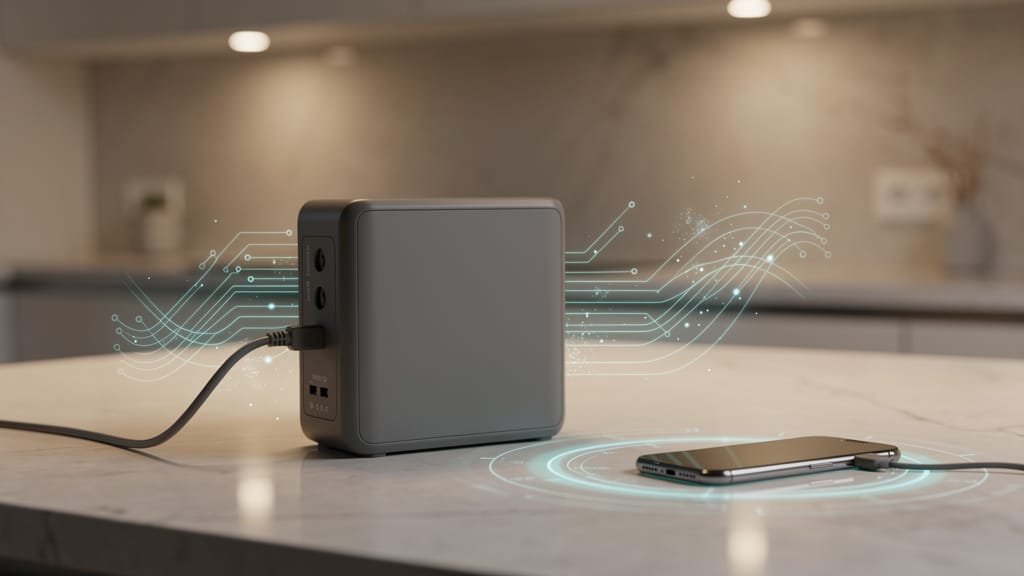
Then handle the charging problem, because a satellite-capable phone at two percent is not a backup plan. A modest power station or even a large power bank covers a phone for several days. Compared with a battery system or a generator, this is a small amount of money for a layer that keeps working after the local network stops.
Written by Mason Vance