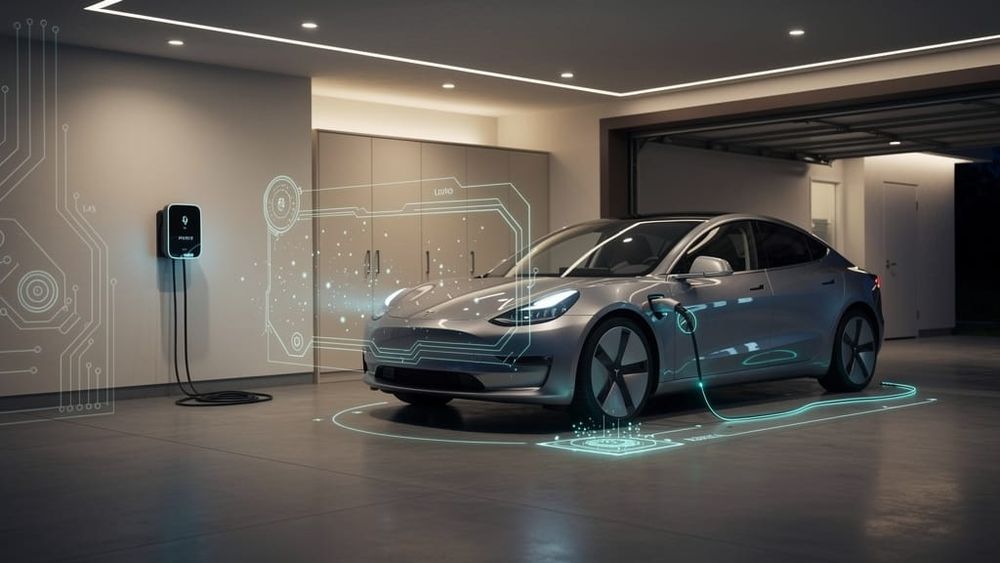
Plugging in an EV the moment it gets home used to be the default habit. Increasingly, utilities are asking homeowners to let the charger decide when to actually start, and paying them for the flexibility. It's a small behavior change that's turning into a meaningful part of how utilities manage rising electricity demand.
Sponsored by Altimetry
On Location: Starbase, Texas SpaceX S-1 Reveals Elon's Hidden Master Plan

Analyst Rob Spivey – whose institutional research is followed by Goldman Sachs, JPMorgan Chase, BlackRock, and Fidelity – flew to SpaceX's Starbase headquarters to reveal what Wall Street missed in the largest IPO in history.
Buried inside the S-1 is something that.
Spivey has called Elon's last three big moves before anyone else. As Rob's research reveals, this one is his biggest yet.
Get the Name and Ticker of the No. 1 Stock at the Center of It (Not Tesla or SpaceX) FREE...
This ad is sent on behalf of Altimetry, 110 Cambridge Street, Cambridge, MA 02141. If you would like to optout from receiving offers from Altimetry please click here.
How Managed Charging Actually Works
A growing number of utilities now offer what's called a managed charging program. A homeowner enrolls their EV or smart charger, and in exchange the utility gets some control over exactly when charging happens within a broad overnight or off-peak window, rather than the instant the car is plugged in. National Grid's Massachusetts program pays participants for charging during off-peak hours, while Eversource in Connecticut and BGE in Maryland run similar programs that reward EV owners with monthly credits or per-kilowatt-hour incentives for shifting most of their charging to specific windows.
The reasoning is straightforward. EV charging is one of the largest new loads showing up on the residential grid, and if thousands of EVs in one area all start charging at the same time in the early evening, right when household demand is already highest, it puts real strain on local infrastructure. By nudging that demand a few hours later, into the middle of the night when overall grid demand is low, utilities can serve more EVs without expensive infrastructure upgrades, and homeowners get paid or discounted for accepting the shift.
A smart charger makes this essentially invisible day to day. It connects to home Wi-Fi, follows a time-of-use rate schedule or a utility signal automatically, and still guarantees a full charge is ready by a set time each morning. The homeowner doesn't have to remember to delay anything manually, the charger and the utility program handle the timing on their own.
The Hardware Stack:
ChargePoint Home Flex: A Wi-Fi connected smart EV charger that supports scheduled and utility-managed charging programs.
Emporia EV Charger: A smart charger built specifically for time-of-use rate optimization and utility program enrollment.
Tesla Wall Connector: A widely installed home charger capable of scheduled charging aligned with off-peak utility rate windows.Vulnerability Score
Older panel technology: A home with an existing PERC-based solar system installed several years ago is generating meaningfully less power per square foot of roof than a new TOPCon installation would in the same space.
No bifacial consideration: A south-facing roof over a light-colored surface may be leaving extra, essentially free output on the table if the installed panels aren't bifacial.
Outdated efficiency assumptions: A homeowner comparing quotes using efficiency numbers from a few years ago may unfairly discount a newer, genuinely more efficient panel as overpriced.
Vulnerability Score
No charging schedule: A homeowner who charges immediately upon arriving home, without regard to utility rate periods, is likely paying more per kilowatt-hour than necessary on most time-of-use plans.
No smart charger: A basic, non-connected charger can't participate in utility managed charging programs, missing out on the incentive payments those programs offer.
No awareness of local programs: Managed charging programs vary significantly by utility, and many eligible EV owners simply haven't checked whether their utility offers one.
What This Means for an EV Owner
None of this requires giving up control in any meaningful way, most programs guarantee the car is ready by morning and only shift the timing of charging that would have happened anyway. For homeowners already paying for a smart charger, enrolling in a utility's managed charging or time-of-use program is close to free money for a habit that mostly happens automatically overnight regardless.
It's worth checking directly with the local utility what's available, since program details, incentive amounts, and enrollment requirements differ enough from one utility territory to another that assuming a neighboring city's program applies locally isn't a safe bet.
The Pentagon said: Delete this (Sponsored by Freedom Financial Research)
Two paths to universal income. One already exists today. (Sponsored by Freedom Financial Research)
Porter exposes Trump’s plan (Sponsored by Porter & Co)
50 years of devastation in less than a decade (Sponsored by Porter & Co)
Written by Mason Vance