After a long outage the power often returns in stages, and sometimes it returns and then goes out again within minutes. That second failure is not bad luck. It is a well documented problem with a name, and utilities plan restoration around it.
The Problem Called Cold Load Pickup
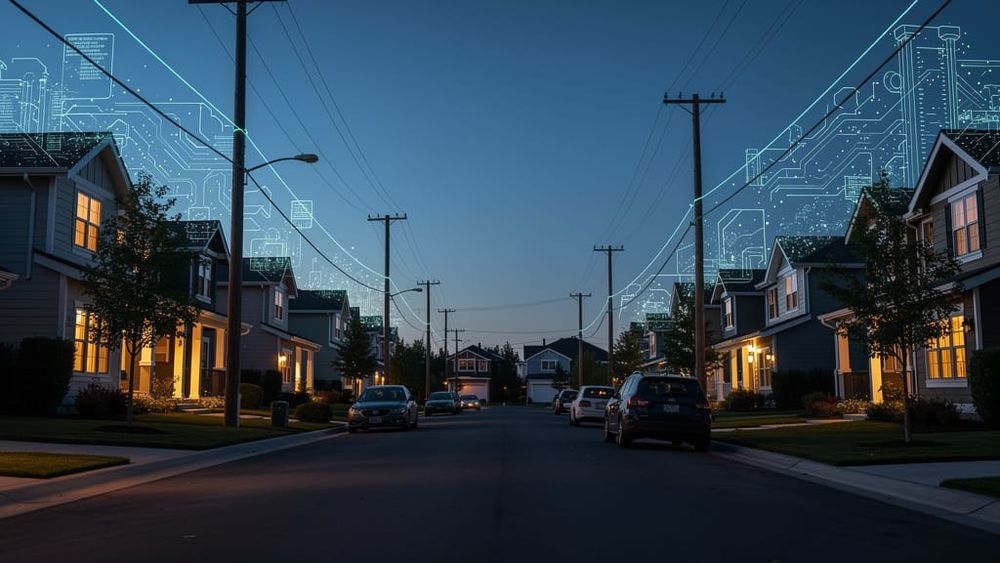
Under normal conditions, the thermostatically controlled loads in a neighborhood are out of step with each other. One house's water heater is running while the next one's is resting. Air conditioners, refrigerators, and heat pumps all cycle independently. That natural spread is what keeps the circuit's total demand well below the sum of everything connected to it. Engineers call it diversity, and every distribution circuit is designed assuming it exists.
An outage destroys it. Every water heater cools at the same time, every house loses the same amount of heat, and every thermostat is calling for power at the moment service returns. The circuit that normally carries a comfortable load now sees everything switch on at once, plus the inrush of every motor starting simultaneously.
The magnitude is significant. Measured cases show restoration demand reaching several times the pre-outage load, and the effect can persist from minutes to hours depending on how long the outage lasted and how far indoor temperatures drifted. The longer the outage and the harsher the weather, the worse the pickup.
This is why the breaker sometimes trips again immediately after restoration, and why the voltage often sags for a while afterward as equipment struggles to hold it up. It is also why utilities restore large circuits in sections rather than all at once, closing one section, letting demand settle, then closing the next.
There is a homeowner-side version of the same problem, and it shows up on backup power. A generator or battery sized comfortably for a household's normal draw can be overwhelmed at the moment of transfer, when the same synchronized demand hits a much smaller source. Everything that was waiting for power starts at the same instant.
The Hardware Stack:
- SPAN Smart Panel: Controls circuits individually, so loads can be brought back in sequence after a transfer rather than all at once.
- Lumin Smart Panel: A retrofit load controller that sits alongside an existing panel and staggers which circuits reconnect.
- Emporia Vue: A whole-panel monitor that records the actual demand spike at restoration, which is how you find out what your own house does.
Vulnerability Score
- Restoration relapse: Power that returns and fails again within minutes is often cold load pickup rather than a new fault, and it extends the total time a household is without service.
- Backup overload: A generator or battery that handles the household's steady load can still trip at the moment of transfer, because everything that was waiting starts together.
- Equipment stress: Simultaneous motor starts on a sagging voltage is hard on compressors, which is the same mechanism that shortens the life of refrigerators and air conditioners over time.
Making Your Own Restoration Gentler
If you have backup power, the useful habit is to turn major loads off before transferring and bring them back one at a time. Water heater first or last depending on what matters to you, then the heating or cooling, then the rest. A smart panel automates exactly this, and the manual version costs nothing.
If you do not have backup, the same logic applies to your own equipment after a long outage. Switching off the electric water heater and the heat pump at the breaker during an extended outage, then restoring them a few minutes apart once power returns, removes your house from the synchronized surge and reduces the chance of a second trip on your own service. It is a small thing, and on a circuit where hundreds of houses are doing the opposite, it is the one part of the situation you control.
Written by Mason Vance