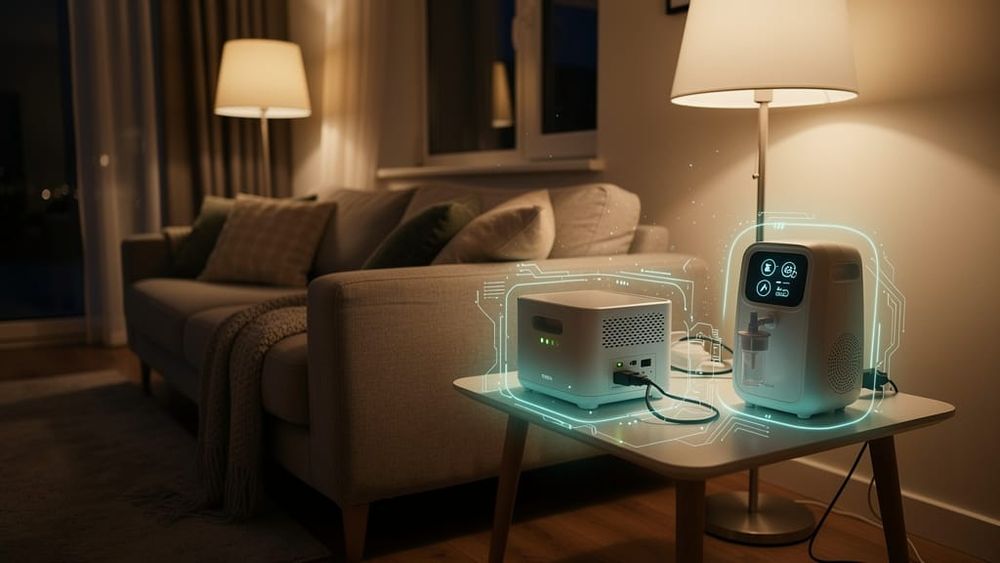
Millions of households rely on electricity-dependent medical equipment at home, from CPAP machines to home oxygen concentrators, and an outage that's a minor inconvenience for most homes is a genuine safety issue for these ones. The gap between what people assume a portable power station can handle and what these devices actually draw is bigger than most homeowners realize.
The Power Math Most People Get Wrong
A CPAP machine without a heated humidifier is a relatively light load, drawing roughly enough power for a single overnight session from a modest battery. Add a heated humidifier and the draw increases meaningfully. A home oxygen concentrator is an entirely different category: a typical unit delivering a standard flow rate draws several hundred watts continuously, which adds up to several kilowatt-hours over a full day, far more than most consumer portable power stations are designed to sustain for long.
This distinction matters because a portable power station marketed generally for home backup can be genuinely adequate for a CPAP user and genuinely inadequate for someone on continuous supplemental oxygen, even though both look like similar plastic boxes on a store shelf. Battery chemistry matters too. Newer lithium iron phosphate, or LiFePO4, batteries are now the preferred choice for medical backup use specifically because they carry a much lower fire risk than older lithium-ion chemistries and hold up to far more charge cycles over time.
For anyone with a genuinely continuous, high-draw medical need, equipment suppliers and physicians increasingly recommend against relying on a single consumer power station as the entire emergency plan. A properly sized home battery system, or in some cases a coordinated plan with a durable medical equipment supplier for a backup unit, is a more realistic solution than assuming a portable unit purchased without doing the specific math will be enough.
The Hardware Stack:
EcoFlow Delta Pro: A portable power station with pure sine wave output, commonly used as backup for CPAP machines and lighter medical devices.
Jackery Explorer 2000 Plus: A high-capacity portable power station capable of sustaining higher continuous loads for longer medical backup needs.
Tesla Powerwall: A whole-home battery system capable of sustaining a continuous high-draw device like an oxygen concentrator for far longer than a portable unit.
Vulnerability Score
Undersized backup power: A portable power station sized for general home use may run out well before an outage ends if it's being asked to run a continuous, high-draw medical device.
No formal emergency plan: A household relying on electricity-dependent medical equipment without a documented backup plan involving their equipment supplier is exposed during exactly the events that matter most.
Wrong battery chemistry: An older lithium-ion power station carries meaningfully higher fire risk than a newer LiFePO4 unit, a real safety consideration for equipment that may run unattended overnight.
What This Means for a Household With Medical Needs at Home
This isn't a case for panic, it's a case for doing the actual math on power draw before assuming a backup solution is adequate. A CPAP user and an oxygen concentrator user have genuinely different backup power needs, and the right solution for one may be seriously insufficient for the other.
Anyone in this situation should talk directly to their durable medical equipment provider about a formal backup power plan, and treat the wattage and runtime specifications on any power station as the deciding factor, not the marketing around it.
Written by Mason Vance