
Most backup power lists cover the things that make noise when they stop. A septic system makes no noise at all, and about a third of them contain a pump that quietly stops with everything else. What happens next depends entirely on which kind of system is under the lawn.
Gravity Systems and Pumped Systems Behave Differently
A conventional gravity system has no electrical parts at all. Waste leaves the house by slope, settles in the tank, and the liquid moves out to the drain field by gravity. An outage changes nothing, and the household can carry on normally.
A pumped system is a different proposition. Where the drain field sits uphill from the tank, where the design uses pressure distribution across the field, or where a grinder pump is needed to reach a sewer main, there is a pump chamber with a float switch and an alarm. With no power, the pump does not run and effluent accumulates in that chamber.
Reserve capacity is the number that matters and it is specific to your installation. The chamber holds some working volume above the pump's normal shutoff level, and that reserve is what you draw down during an outage. It is usually measured in a day or so of ordinary household use, not a week. Aerobic treatment units add a blower to the same picture, and the biology in those systems degrades when the air stops.
The response during an outage is water discipline rather than equipment. Shorter showers, no laundry, no dishwasher, and not flushing after every use all extend the reserve directly, because every gallon down the drain has to sit in that chamber.
Restoring power deserves more care than most people give it. Health departments generally advise against letting a float-controlled pump simply catch up all at once, because dumping a large accumulated volume onto a drain field can flood it or push backflow into the house. The common guidance is to run the pump briefly, then let the field rest for several hours, and repeat while keeping water use low for a few days. A high water alarm sounding when power returns is expected rather than alarming, though one that stays on for a day is a reason to call a professional.
The Hardware Stack:
Zoeller Effluent Pump: A typical septic effluent pump, whose running wattage is the figure that belongs in a backup load calculation.
EcoFlow Delta Pro 3: A portable station with enough surge capacity to start a septic or grinder pump for the few minutes a dosing cycle needs.
Reliance Controls Power Inlet Box: An exterior inlet feeding a transfer switch, which is how a pump circuit gets generator power without extension cords across a wet yard.
Vulnerability Score
Silent failure: A septic pump gives no sign it has stopped until the alarm sounds or a drain slows, by which point the reserve is largely gone.
Unknown reserve: Most households do not know whether their system is gravity or pumped, let alone how many hours of storage the chamber has.
Restoration risk: Letting an accumulated volume pump out all at once can flood the drain field or back up into the house, so the recovery needs managing rather than just switching the breaker back on.
Finding Out Which One You Have
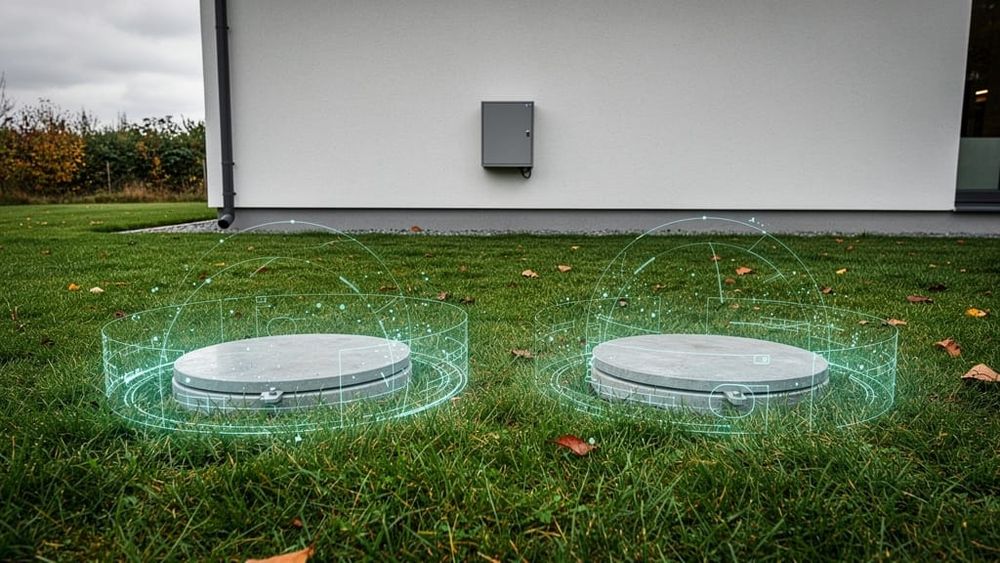
Look for a second lid or a small riser in the yard beyond the main tank, a conduit running out to it, and a panel on the house wall with an alarm light. Any of those means a pump. Your county health department usually holds the permit drawing for the original installation, which will say plainly what the system is and how large the chambers are.
If it is pumped, put the pump's running wattage into your backup plan and decide now whether it is on the list. It is a small load that runs briefly, so it is an easy one to cover, and the alternative is a household rationing water on day two of an outage while hoping the chamber holds.

Written by Mason Vance