
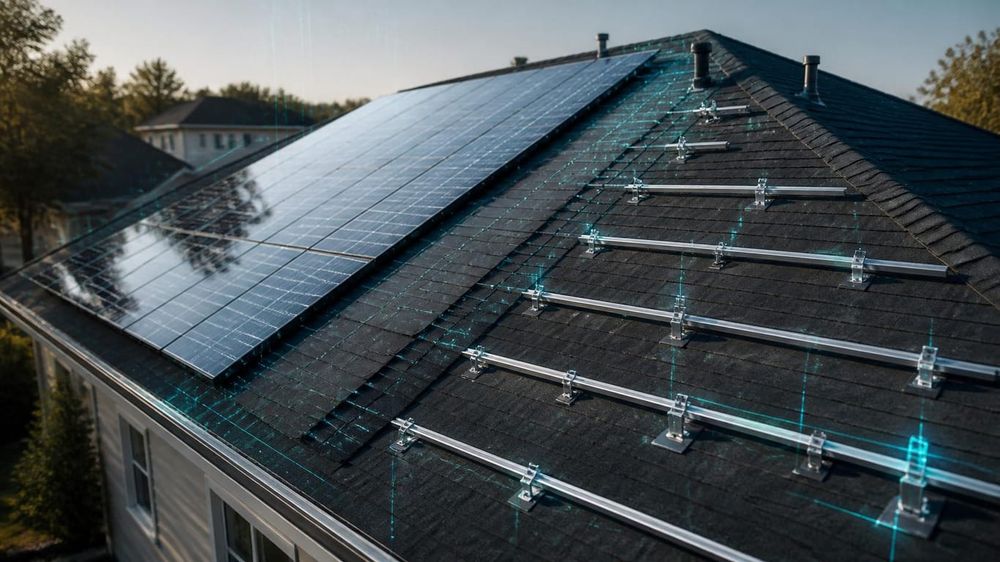
Solar panels last around 25 to 30 years. Asphalt shingles last around 20. If those two clocks are not aligned when the array goes up, at some point a roofer has to work under equipment that a different company installed, and somebody has to take it down first.
The Detach and Reset Job
The industry calls it a detach and reset, and it is its own line item. National figures put the whole job somewhere between $2,800 and $4,800, with about $3,800 as a typical number. That works out to roughly $200 to $300 per panel, and it is almost entirely labor.
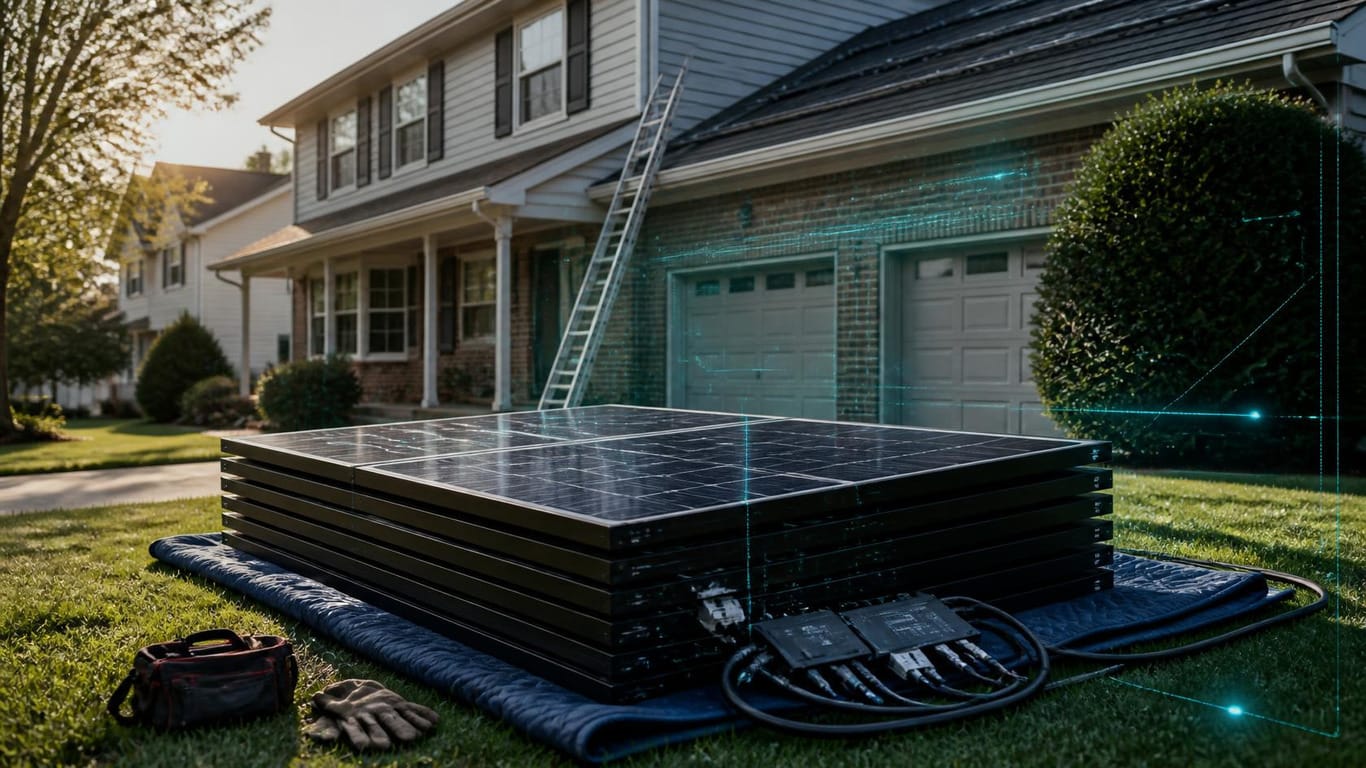
The sequence explains the cost. The system has to be disconnected from the grid, the breakers, and the meter before anyone touches a module. The panels come off the racking and go down to ground level, which takes a day or two. The roofers do their work. Then the array goes back up, gets reconnected, and gets inspected, which takes another two or three days. Two crews, one roof, and a week of coordination.
A few things make this cheaper or more expensive. Ground-mounted arrays skip the problem entirely. Tile roofs cost more than asphalt because the tiles break. Older racking may need new flashing and new penetrations rather than reusing the originals, since a roofer will not warranty a new roof around twenty-year-old boots.
The part worth planning around is the order of operations, not the price. If your roof is more than about ten years old when you are quoting solar, replacing it first is nearly always cheaper than replacing it later around the array. And if you already have both, knowing roughly how much roof life is left turns this from a surprise into a scheduled expense.
One more detail people get wrong: this is work for a licensed solar installer, not the roofing crew. Having a roofer detach panels risks damaging the electrical components and can void equipment warranties. Many homeowners' insurance policies will cover removal and reinstallation when a certified professional does it as part of a covered roof claim, which is worth asking your carrier about before the work starts.
The Hardware Stack:
IronRidge XR Rail: A common residential racking system, whose flashing and mounts are the parts most likely to be replaced rather than reused on a reset.
Enphase IQ8 Microinverters: Module-level electronics that come down with the panels, which is part of why a detach is electrical work rather than just lifting.
GAF Timberline HDZ: A widely used architectural asphalt shingle, roughly 25 to 30 years of rated life, which is the class of product that brings a roof timeline in line with a solar one.
Vulnerability Score
Mismatched timelines: A roof with ten years left under an array with twenty-five guarantees a detach and reset job at some point, at full cost.
Wrong contractor: A roofing crew detaching panels can damage wiring or module electronics, and can void the equipment warranty that would otherwise have covered the damage.
No downtime plan: The system produces nothing for the week it is on the ground, which matters more if the household relies on it for backup than for offsetting a bill.
The Question to Ask Before the Array Goes Up
If you are quoting solar and your roof is not new, get a roofer to tell you how many years it has left before you sign anything. A roof replacement done first adds cost to this year and removes a five-figure-adjacent job from year twelve.
If the array is already up, the useful move is simply to know the number. Ask at your next roof inspection how much life is left, and budget the detach and reset alongside the shingles rather than discovering it as an add-on when the roofer hands you the quote. It is an entirely predictable expense, which is the best kind to plan for.
Written by Mason Vance