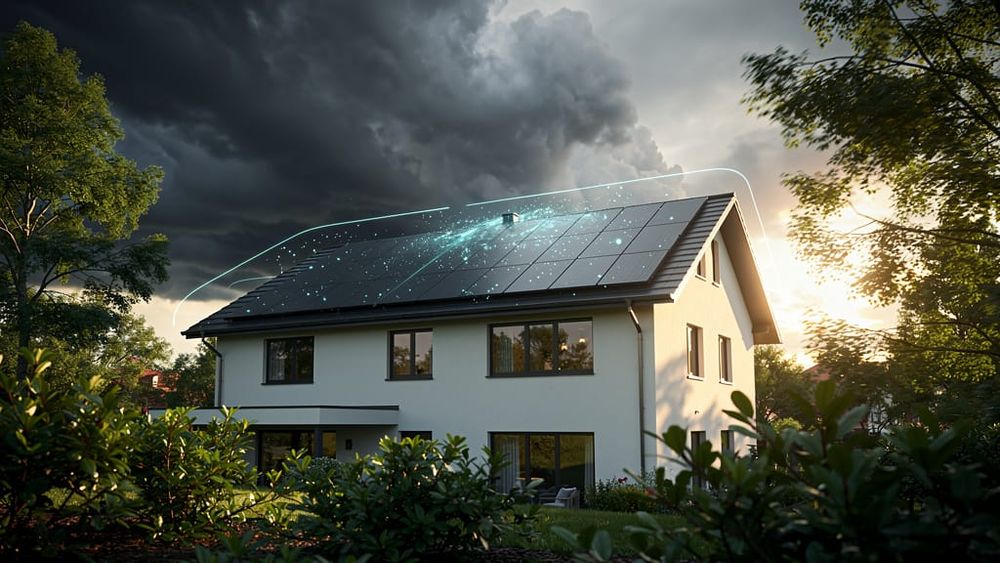
A home battery that runs on a daily savings schedule is usually half empty by evening, which is exactly how it is supposed to work. It is also exactly the wrong state to be in when a line comes down at nine o'clock. Most modern systems have a feature that resolves this automatically, and a surprising number of owners have never turned it on.
Sponsored by Behind the Markets
Elon's next millionaires start October 24?
Dear Fellow Investor,
Elon Musk has created more millionaires than any other person on the planet.
• Tesla has made more than 5,000 of its own employees millionaires.
• SpaceX minted 4,400 new millionaires in a single day.
• A welder with a $10,000 SpaceX stock package became a millionaire on IPO day.
Now Elon is gearing up for the biggest venture of his entire career.
Former Wall Street CEO Dylan Jovine says it could be bigger than all of Elon's previous ventures combined.
And this time, you don't need to be a SpaceX insider or an early Tesla investor to get rich from it.
Because this new venture is powered by an obscure AI firm that 99% of investors have never heard of.
Elon has quietly relied on this firm since 2012.
It supplies crucial technology for Tesla, Starlink and SpaceX.
Dylan calls it "Elon's 100X AI Stock."
His research indicates it could mint an entire new class of millionaires, starting on October 24.
And this time, you could be part of it.
See Elon's 100X AI Stock before October 24 here >>
The Buck Stops Here,
Kelly Maguire
Behind the Markets
How Weather-Triggered Charging Works
The idea is straightforward. The system watches official weather alerts for your area, and when one is issued that is associated with damage to power lines, it overrides the normal economic behaviour and charges the battery to full from whatever source is available, including the grid.
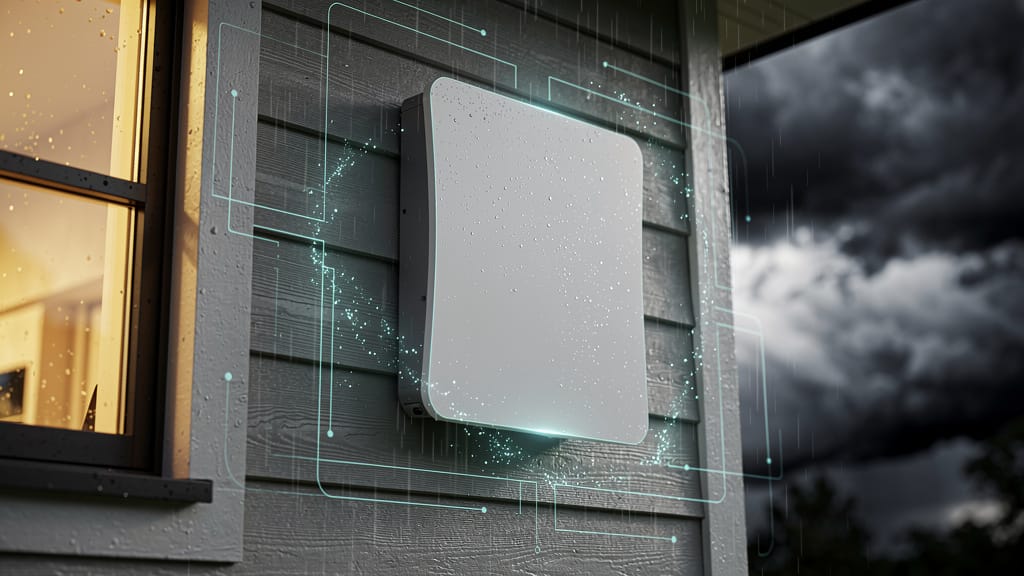
Tesla calls its version Storm Watch. It responds to severe weather watches and warnings issued for your location, including hurricanes, tornadoes, winter storms, high winds, thunderstorms, floods, and red flag warnings. When it activates you get a notification, the battery fills, and it stays full until the event passes, after which the system returns to its previous mode. Enphase offers an equivalent under the name Storm Guard. Other manufacturers have their own.
Two conditions have to be met for it to work, and both are easy to miss. The app has to be paired with the system so it can receive the alert, and grid charging has to be enabled. Grid charging is normally switched on by the installer, but systems configured purely for solar self-consumption sometimes have it off, and without it the feature can only use whatever sun is available, which during a storm is not much.
There is a manual version worth knowing about for the cases the automatic trigger will not catch. Planned maintenance by the utility, a public safety power shutoff, a forecast that has not yet produced a warning, or simply leaving town all justify raising the backup reserve by hand a day ahead. On most systems that is a slider in the app, and setting it to a high value for a day costs very little.
The tradeoff is real but small. A battery charged from the grid during a peak period buys energy at a bad price, and a battery held full gives up the daily arbitrage it would otherwise do. Against that is the difference between a full battery and a quarter-full one at the start of a multi-day outage.
The Hardware Stack:
Tesla Powerwall 3: Implements Storm Watch, which requires the app paired and grid charging enabled to work as intended.
Enphase IQ Battery 5P: Offers Storm Guard, the same idea within the Enphase app and system controller.
FranklinWH aPower 2: Another whole-home battery with weather-aware reserve behaviour, relevant on retrofits to existing arrays of any brand.
Vulnerability Score
Economy mode at the wrong moment: A battery optimized for daily savings is routinely at a low state of charge in the evening, which is when most weather-driven outages begin.
Disabled grid charging: Where grid charging is switched off, a weather-triggered feature cannot actually fill the battery, and the setting is invisible unless someone checks.
No alert, no trigger: The feature keys off official warnings, so a planned utility shutoff or a localized failure produces no automatic response at all.
Ten Minutes in the App
Open your battery's app and find three things: whether the storm feature is switched on, whether grid charging is enabled, and what your normal backup reserve is set to. Those three settings between them determine how much energy you actually have when a storm arrives.
Then decide on a manual habit for the cases the automatic trigger will miss. A reasonable one is to raise the reserve whenever the forecast turns bad enough that you would bring the patio furniture in. It costs one slider and a few cents of arbitrage, and it is the difference between a system that was ready and one that was still optimizing.
Written by Mason Vance
Any discussion of securities, assets, or financial markets in this email is for informational context only and does not represent investment guidance of any kind.