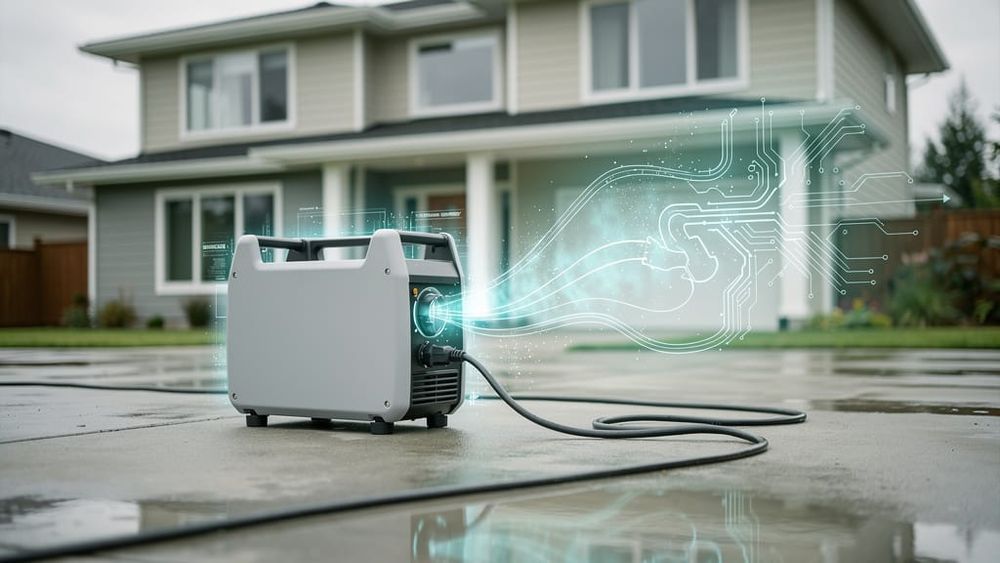
About 100 people a year die in the United States from carbon monoxide poisoning connected to portable generators, according to the Consumer Product Safety Commission. Since 2020 a voluntary industry standard has required new portable generators to carry a sensor that shuts the engine down before CO reaches a dangerous concentration. Plenty of generators in American garages predate it.
What the Standard Requires
The standard is ANSI/PGMA G300, written by the Portable Generator Manufacturers' Association. The 2018 revision took effect in March 2020 and requires a generator to detect rising carbon monoxide and shut itself off before the concentration exceeds 800 parts per million, then hold a warning light for five minutes so whoever comes looking understands why it stopped. A newer revision, G300-2023, took effect at the start of 2025.
This matters because of how the deaths actually happen. Carbon monoxide has no smell and no color, and a running generator produces it continuously. The dangerous scenarios are familiar: a generator in an attached garage with the door partly open, one under a deck or a covered porch, one placed near a window or a dryer vent that draws exhaust back inside. In every case the operator believed there was enough ventilation and there was not.
The shutoff sensor does not make any of those placements safe. It is a last line of defense for a mistake, not permission to make the mistake. Outdoors, well away from the house, with exhaust pointed away from doors and windows, is still the only correct placement.
It is also worth knowing that the sensor watches the air around the generator, not the air inside the house. A unit sitting outside in a light breeze can read clean while exhaust drifts steadily through an open basement window twenty feet away. The shutoff protects against a generator smothering in its own exhaust, which is the most common fatal pattern, but it is not a whole-house monitor.
Two practical notes. First, the standard is voluntary, so compliance varies by manufacturer and by model year. Look for language about CO shutoff, CO Guard, CO Sense, or CO Protect on the unit or in the manual. Second, if your generator is more than about six years old, it very likely has no such sensor, and no retrofit exists.
The Hardware Stack:
Honda EU2200i with CO-MINDER: An inverter generator with an integrated carbon monoxide detection system that shuts the engine down when concentrations rise.
Generac GP Series with COsense: Generac's shutoff technology across its portable line, meeting the G300 requirement on current models.
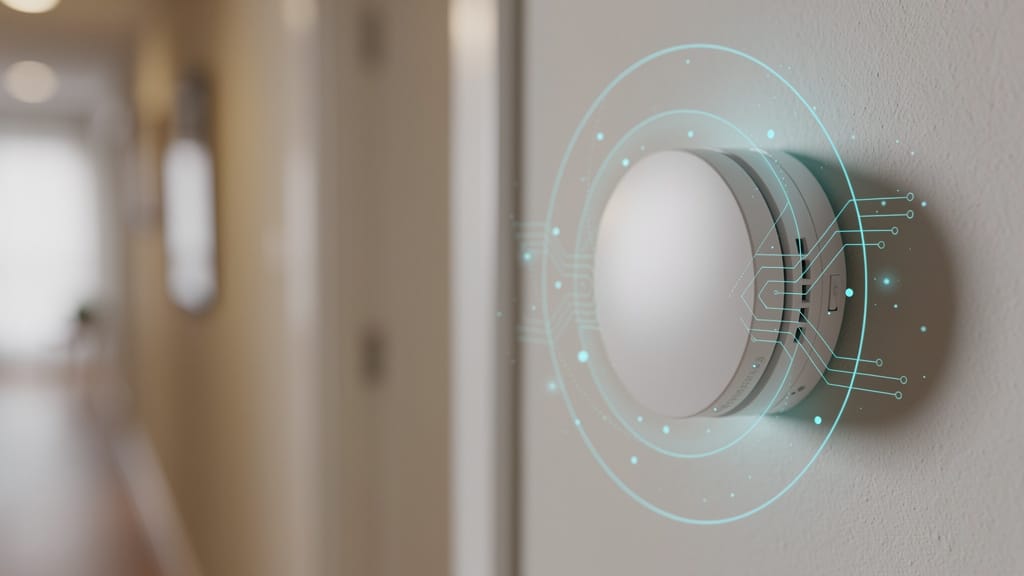
First Alert CO400: A battery-powered carbon monoxide alarm for inside the house, which is the independent check the generator's own sensor cannot provide.
Vulnerability Score
Pre-2020 equipment: A portable generator bought before the standard took effect has no CO shutoff and gives no warning at all before conditions inside become dangerous.
No indoor alarm: A house without working CO alarms on every level has no way to detect exhaust that has found its way inside, from a generator or anything else.
Sheltered placement: Running a generator under a deck, in a garage, or in a breezeway defeats the ventilation the engine's rating assumes, whatever the weather makes tempting.
Two Things to Do Before the Next Outage
Pull the manual for the generator you own, or read the sticker on the housing, and find out whether it has a CO shutoff. That answer changes how much margin you have when you are tired and it is raining and the obvious dry spot is the garage.
Then check the carbon monoxide alarms inside the house, because they are the layer that does not depend on the generator working correctly. Most CO alarms have a service life of seven to ten years and print an expiration date on the back, which is something almost nobody has looked at. Both of these are worth doing in September rather than during the first storm of the season.
Written by Mason Vance