
Aging utility infrastructure and supply chain constraints on replacement components are extending outage durations across regional grids. Estates that generate and store their own power have stopped depending on repair timelines they cannot control.
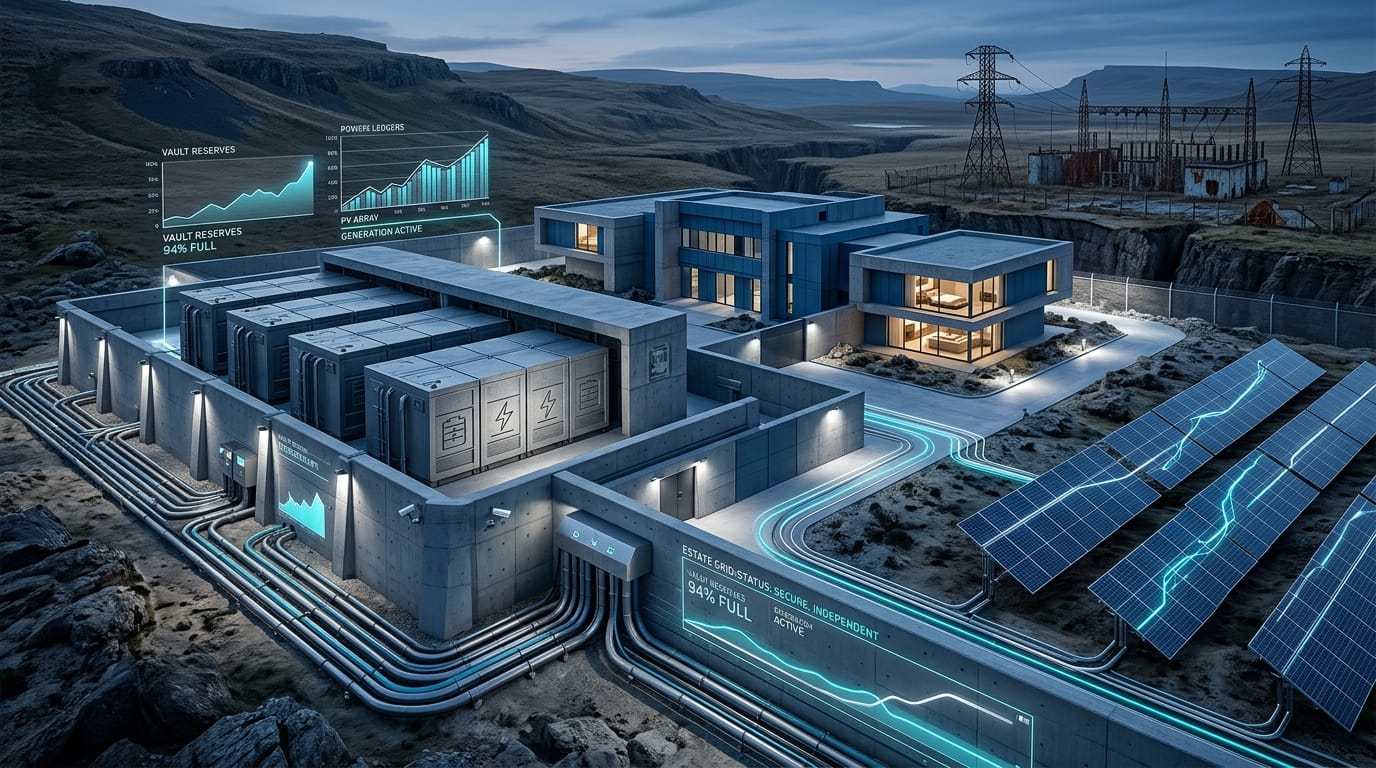
The Reserve Vault: Detaching Your Estate From a Failing Utility System
The national power grid is running on infrastructure built for a different era. Transformer lead times have extended substantially due to supply chain constraints on copper and specialized electrical components, meaning that when a major failure occurs, restoration timelines are measured in weeks rather than days. Regional blackouts that once represented isolated events are becoming extended outages that expose how little redundancy exists in the delivery infrastructure most families depend on entirely. Paper wealth - investment accounts, cash holdings, financial instruments of any kind - carries zero functional value when a well pump has no power. Physical infrastructure is the only asset category that keeps an estate operational when the grid goes down.
Engineering the Sovereign Microgrid
Modern battery chemistry has reached a threshold of capability that makes whole-estate energy independence genuinely viable for the first time. Lithium iron phosphate chemistry - the current standard for serious residential and commercial storage deployments - delivers thermal stability that eliminates the fire risk associated with earlier lithium formulations, and offers cycle life measured in thousands of deep-discharge cycles rather than hundreds. The footprint-to-capacity ratio of current commercial systems allows meaningful multi-day storage capacity to be deployed within the physical constraints of a working estate.
The hardware selection process requires moving past consumer-grade equipment toward components designed for continuous commercial operation. The distinction matters because estate-critical systems - security perimeters, communication infrastructure, water filtration, climate control for temperature-sensitive spaces - cannot tolerate the performance degradation that consumer storage systems exhibit under sustained load. Paper wealth cannot substitute for physical infrastructure, and the physical infrastructure worth deploying is equipment built to the standards that commercial operators demand.
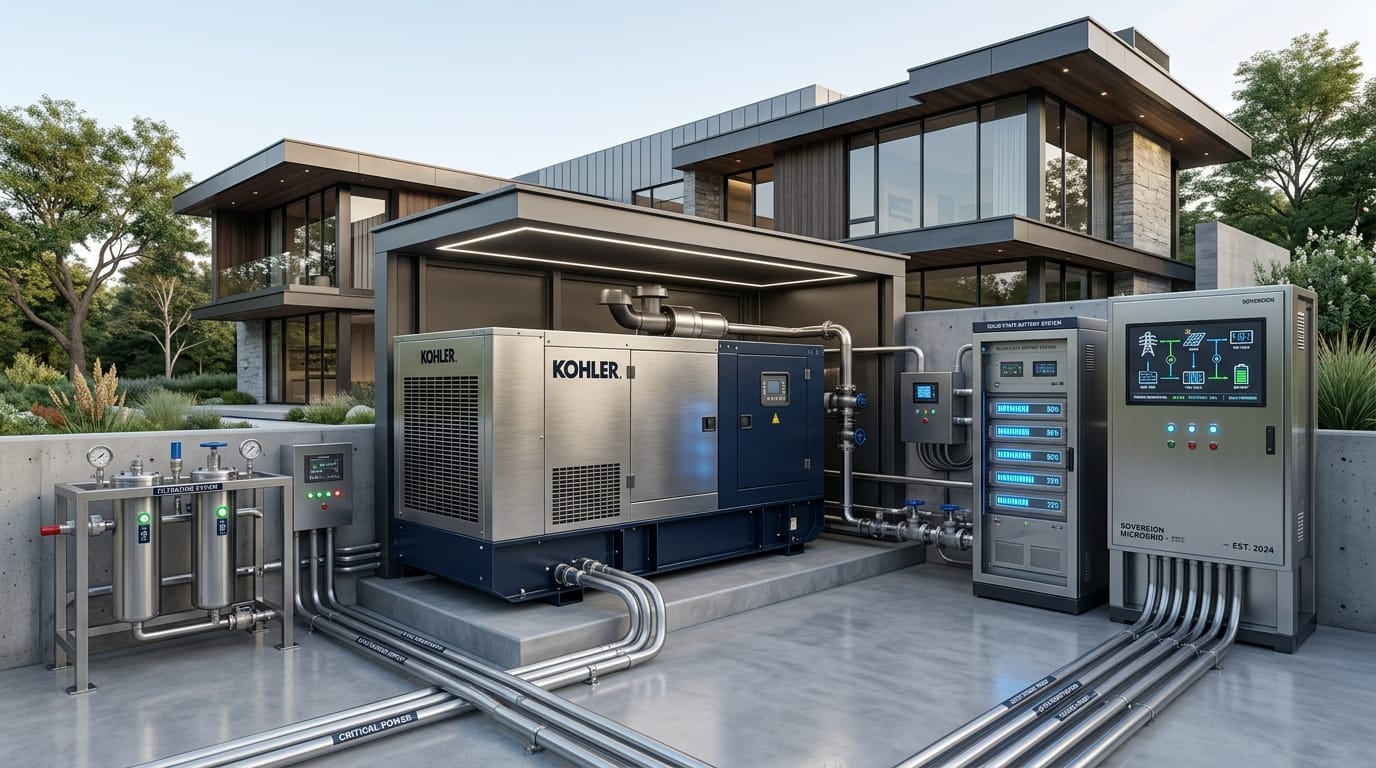
Tesla Powerwall commercial-grade battery system: Primary storage core providing multi-day capacity with thermal management and integrated grid-isolation switching for seamless transition to island mode during outage events.
Generac heavy-duty multi-fuel standby generator: Generation backbone ensuring continuous charging capacity during extended low-solar periods, with multi-fuel capability reducing dependency on any single fuel supply chain.
Victron smart monitoring hub: Command logic providing real-time energy routing, load prioritization, and remote monitoring - ensuring that critical systems receive power preferentially when storage capacity is being managed across extended outages.
Vulnerability Score
A standard estate without dedicated generation and storage infrastructure has specific exposure points worth stating directly.
Grid dependency: Zero backup power duration when utility supply is interrupted - security, communications, and water systems go offline simultaneously with the grid.
Outage duration exposure: No control over restoration timeline, which is set by utility repair crews managing competing demands across an extended service territory.
Water access: Well pump systems lose function immediately during grid failure regardless of water table levels - a critical vulnerability for estates not connected to municipal supply.
Communication uptime: Satellite and cellular communication infrastructure at the property level depends on powered equipment that fails when the grid does.
Temperature management: Climate control for wine cellars, server rooms, equipment storage, and inhabited spaces requires continuous power that grid dependency cannot guarantee during extended outages.
An estate with a properly configured reserve matrix eliminates each of these exposure points by relying on owned physical infrastructure rather than utility dependence. The sovereignty of the estate during any grid event is determined entirely by the adequacy of the hardware installed on the property.
Finalizing Your Infrastructure Liberty
The installation sequence that produces genuine grid independence follows a clear logic. Generation capacity establishes the source. Storage capacity establishes the duration. Command logic establishes the priority hierarchy that keeps critical systems online when total capacity is being managed. Each component is necessary; none is sufficient alone.
Estates that have completed this configuration report a qualitative shift in how they relate to grid events in the surrounding area. Extended outages that disrupt neighbors become weather events to observe rather than emergencies to manage. That shift reflects the core value of physical infrastructure investment: it converts an uncontrolled external dependency into a managed internal capability. The municipal utility network will continue aging faster than it is being replaced. The estates that have built their own reserve vaults have already made their peace with that reality.