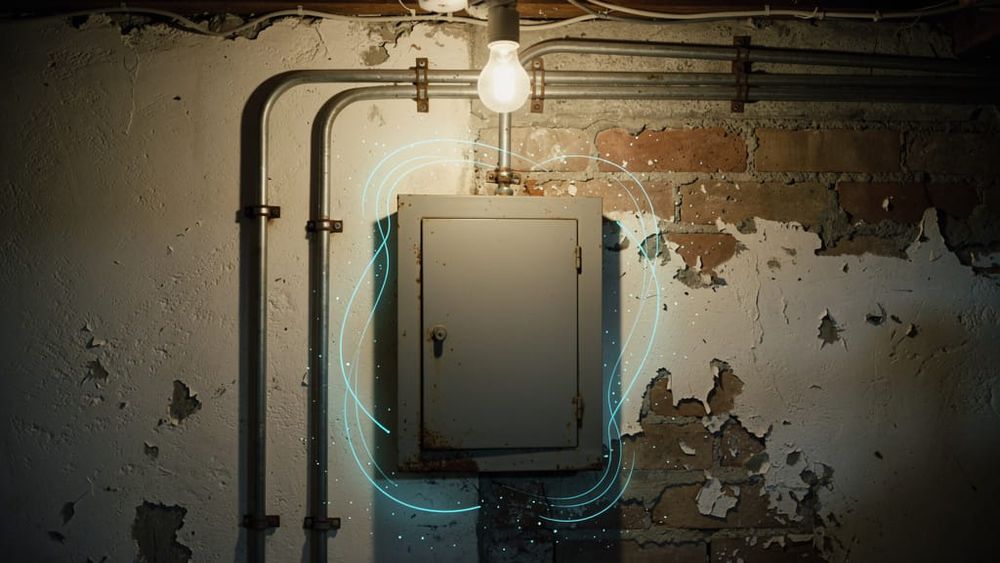
Most electrical panels are unremarkable and last decades without attention. A few brands installed between roughly the 1950s and the early 1980s are different, and the clearest sign of how different is that insurance companies have started declining to cover houses that still have them.
What Is Actually Wrong With Them
The two names that come up most often are Federal Pacific Electric, whose panels carry Stab-Lok breakers, and Zinsco, sometimes branded Sylvania-Zinsco. Pushmatic and Challenger panels attract similar scrutiny in some regions.
The Federal Pacific problem is the breaker itself. Independent testing over many years has found that a meaningful share of Stab-Lok breakers fail to trip on an overload. A breaker that does not open during a fault is not a safety device at all, and the circuit keeps carrying current it was never sized for until something heats up enough to matter.
Zinsco fails differently. The breakers can melt onto the aluminum bus bar they clip to, which both prevents them from tripping and, in some cases, leaves the circuit energized when the switch is in the off position. Corrosion at the bus is common and accelerates the problem.
Both failures share a property that makes them hard to take seriously: the panel works normally for decades. There is no symptom, no nuisance tripping, no warning. The defect only presents during the fault the breaker was installed to interrupt.
The insurance consequence is the practical driver now. Some carriers will not write a policy on a house with one of these panels, others will write it with a surcharge, and home inspectors flag them routinely enough that they turn up as a negotiation item during almost every sale.
Replacement is a known quantity. A panel swap typically runs in the low thousands, often quoted between two and four and a half thousand dollars, with the higher end reflecting houses that also need service entrance work because the rest of the installation is the same age.
The Hardware Stack
Square D QO Load Center: A widely used replacement panel, with a breaker line that has a long and well documented trip record.
Eaton BR Load Center: Another common replacement, usually chosen when breaker availability and cost matter more than the premium line.
Ting by Whisker Labs: A plug-in monitor that watches for arcing in the house's wiring, useful as an interim measure while a replacement is being scheduled.
Vulnerability Score
Silent failure mode: A breaker that will not trip behaves identically to a working one until the moment it is needed, so nothing in daily use reveals the problem.
Coverage risk: Carriers increasingly decline or surcharge houses with these panels, which turns an electrical question into an insurance and resale question.
Blocked upgrades: A battery, an EV charger, or a solar interconnection all land on the main panel, and installers will generally not add to one of these rather than replace it.
How to Find Out What You Have
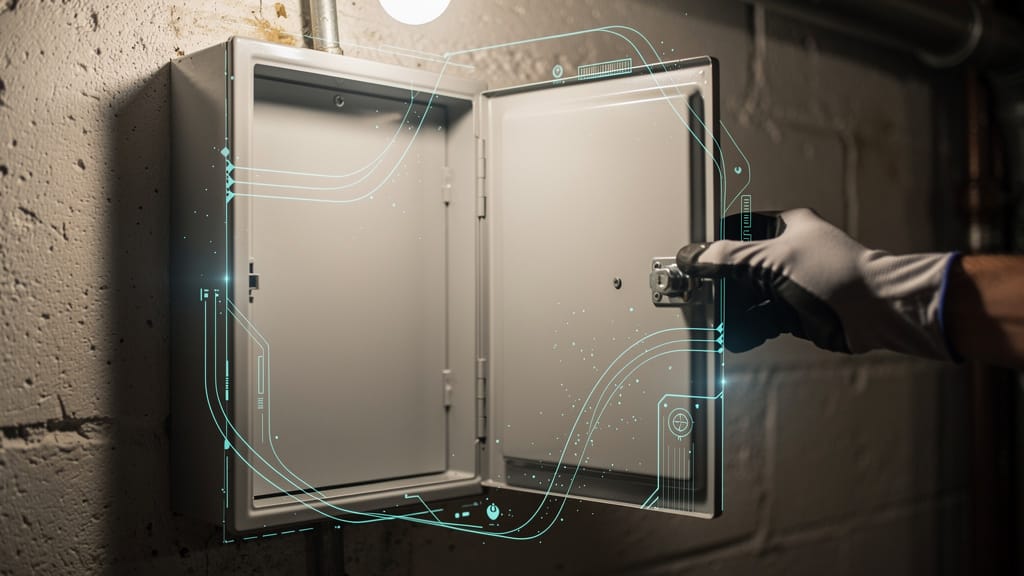
Open the panel door, which is the cover with the hinge, not the dead front behind it, and look at the label inside. Federal Pacific panels usually say so, and the breakers typically have a distinctive red stripe on the toggle. Zinsco panels often carry the Zinsco or Sylvania name with coloured breaker handles.
If you find one of these names, the next step is a quote rather than an emergency. These panels have been in service for decades and the risk is of the quiet kind rather than the immediate kind. But it is worth doing before your insurance renews, before you list the house, and certainly before you spend money on a battery or a charger that would have to be connected to it.
Written by Mason Vance