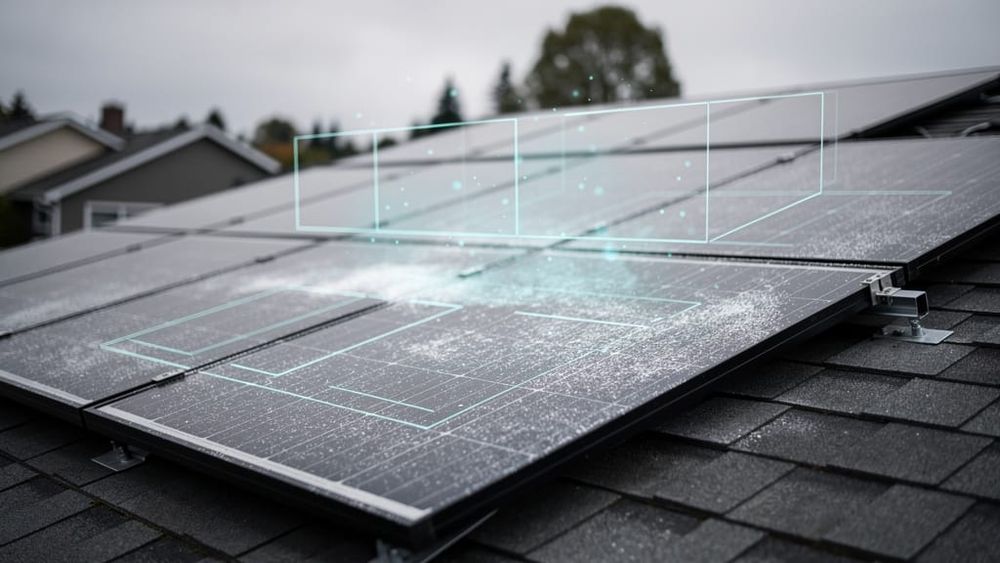
Solar panels are supposed to be maintenance free, and for the most part they are. The exception is a thin layer of dust, pollen, and combustion particles that builds up on the glass, and the surprising part is how much it varies: for some houses it is a rounding error and for others it is the single largest loss in the system.
What Soiling Actually Costs
The industry term is soiling, and the global average annual energy loss from it is usually put somewhere in the range of five to ten percent. That average hides an enormous spread. In climates with frequent, regular rainfall the loss often sits below one percent, small enough that cleaning would never pay for itself. In dry, dusty regions the figure climbs steeply, and measurements in desert conditions have recorded deposition heavy enough to cost a substantial fraction of output within weeks.
The variable that matters most is rainfall frequency, not rainfall quantity. A region with regular moderate rain keeps panels close to clean year round. A region with a long dry season followed by heavy rain accumulates for months. There is a counterintuitive wrinkle here as well: light rain and dew can make things worse temporarily, because a small amount of moisture helps particles bond to the glass rather than washing them away.
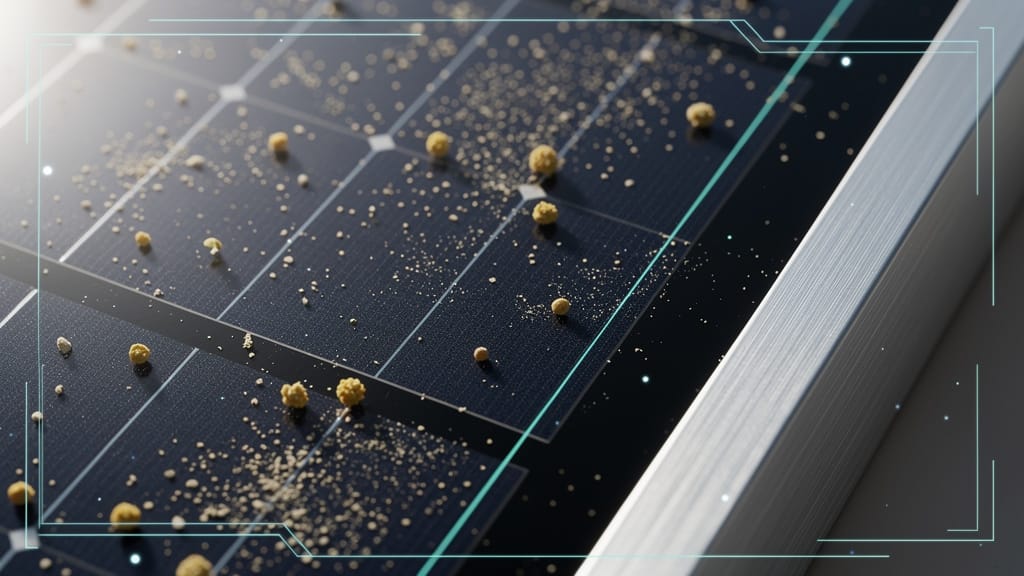
Composition matters too. Fine dust and pollen form an even film that reduces output modestly across the whole array. Bird droppings, leaves, and lichen do something different, blocking cells completely in one spot. Because cells are wired in series through bypass diodes, a fully shaded cell can take a much larger share of that module's output offline than its area suggests. A little concentrated soiling is worse than a lot of even soiling.
Wildfire smoke deserves its own note, because it does two things at once. The smoke in the air reduces the light reaching the array while it is present, and the ash that settles afterward stays until something removes it. The first effect ends when the smoke clears and the second does not.
The Hardware Stack
- Enphase IQ8 Microinverters: Per-panel production reporting, which is what distinguishes even soiling across the array from one blocked module.
- SolarEdge Power Optimizers: The same per-module visibility within a string system, useful for spotting a single dirty or shaded panel.
- Unger HiFlo nLite Water-Fed Pole: A deionized-water pole system of the kind cleaners use, which cleans from the ground without detergent residue.
Vulnerability Score
Invisible decline: Soiling losses accumulate gradually and look like normal seasonal variation, so a system without per-panel monitoring gives no signal that anything is wrong.
Concentrated blockage: A single heavily soiled or obstructed module can cost far more output than its share of the array, and only per-module data reveals it.
Damage from cleaning: Abrasive tools, detergents, and pressure washers can damage the anti-reflective coating or the seals, and warranty claims will ask how the damage occurred.
Deciding Whether It Is Worth Doing
Start with the data rather than the appearance. If the system reports per-panel production, compare panels against each other rather than against last year. Uniform decline across the array points to a film, while one panel well below its neighbors points to an obstruction that is worth addressing whatever the climate.
For most homes in regularly rainy regions the honest answer is to leave the panels alone and watch the numbers. For dry or dusty regions, an annual or semi-annual clean with plain water and a soft brush, done from the ground where possible, usually pays for itself. Never clean a hot array in the middle of the day with cold water, and never put a ladder on a roof for a few percent of annual production.
Written by Mason Vance