
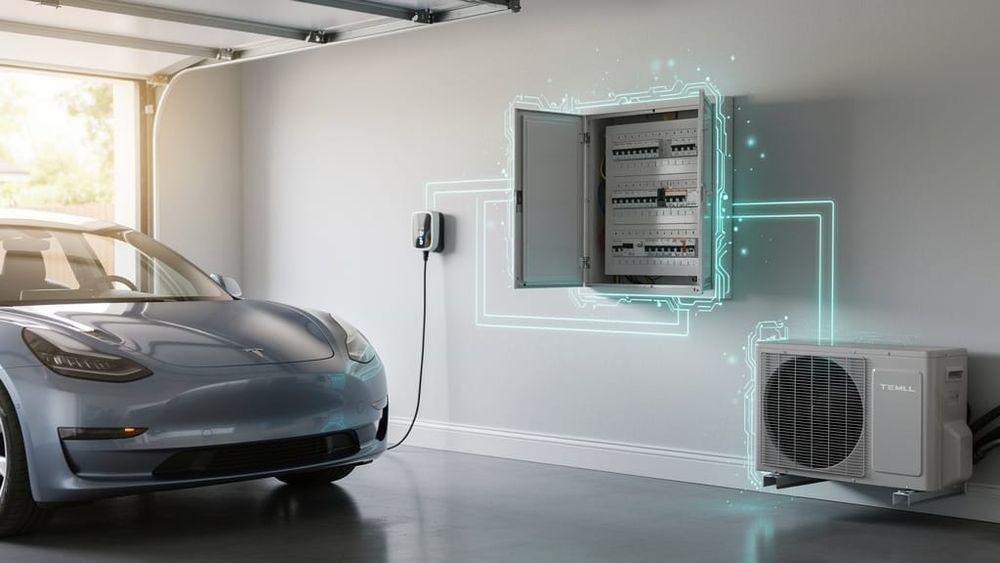
Opening an electrical panel and seeing a few empty breaker slots looks like available room for whatever comes next, an EV charger, a heat pump, a home battery. That assumption is one of the more common and costly mistakes homeowners make when planning an electrification project, and it has nothing to do with whether the slots are physically empty.
Sponsored by Golden Portfolio
$9 trillion comes due in 12 months [good news for gold]
$9 trillion… That's how much US debt has to be rolled over in the next 12 months.
That $9 trillion has to be absorbed by somebody. Here's the problem...
The usual buyers — foreign central banks — aren't showing up anymore.
Some – like China, Japan, India, Saudi Arabia and the UAE – are all net sellers now.
Instead, they're buying gold.
Go here to find out what this debt rollover means for gold.
So who absorbs $9 trillion?
There's only one answer:
The nation printing all the money.
Each new dollar created out of thin air means the dollars you earned and saved are worth less. In other words…
YOU are paying for the $9.6 trillion US Treasuries being rolled over in the next 12 months.
Read that again.
The only good news is that gold still offers you a way out. This is the exact setup gold bugs have been predicting for over 50 years.
When the debt gets rolled over, owning gold will still put you on the right side of the math.
But I do not recommend buying physical gold at these prices – even with the massive pullback.
Here's your choice:
Watch your savings get ground down by money printing…
Or, own the one asset that rises as the dollar falls.
The best news is…
The current pullback is giving smart investors a second chance to buy the best gold assets at prices we haven’t seen since 2024.
My top-performing portfolio was built for exactly this scenario – which is why it’s already up as much as 1,200% in just the last two years.
Garrett Goggin, CFA, CMT
Lead Analyst and Founder, Golden Portfolio
Space in the Panel Isn't the Same as Available Capacity
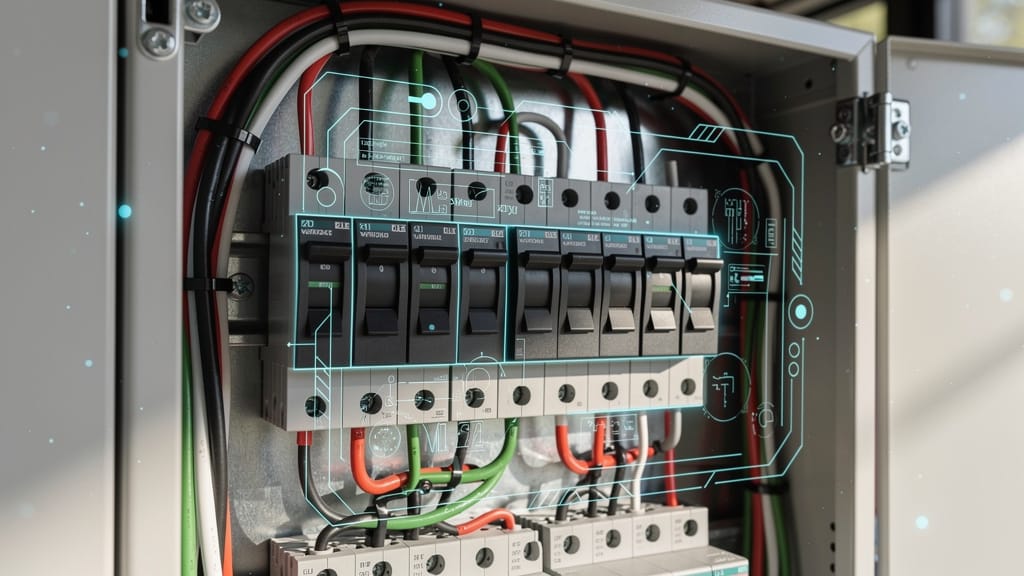
A panel's open breaker slots represent physical room to add a circuit, but the actual constraint is the panel's total electrical capacity, typically 100, 150, or 200 amps, which is a completely separate number. A 100-amp or 150-amp panel, even with several open slots, often cannot safely support the combined load of a Level 2 EV charger, a heat pump, and a battery inverter on top of everything a home already runs, regardless of how much open physical space exists inside the box.
This is exactly why an electrician performs a load calculation before recommending equipment, a step that catches this exact mismatch before it becomes a problem during installation rather than after. The 2026 update to the National Electrical Code actually helps here in one specific way: new load calculation rules for general lighting and receptacle circuits create more usable capacity on paper for things like EV chargers and heat pumps, in some cases avoiding a full service upgrade that would have been required under older rules. Separately, any large load expected to run continuously, like an EV charger, has to be calculated at 125 percent of its rated draw, a detail that surprises homeowners comparing a charger's sticker rating to what it actually reserves on the panel.
For most homes planning to eventually add several of these systems, whether all at once or over several years, upgrading to a 200-amp panel is the most straightforward way to avoid running into this ceiling piecemeal. A smart electrical panel is an increasingly common alternative, using real-time monitoring and automatic load balancing to make more of an existing panel's capacity usable without a full service upgrade, generally at a similar cost.
The Hardware Stack:
Span Panel: A smart electrical panel that manages existing capacity through real-time monitoring and automatic load balancing, an alternative to a straightforward capacity upgrade.
Leviton Load Center: A modern panel option supporting higher amperage service specifically sized for homes planning multiple electrification upgrades.
Emporia Load Management: A standalone load management device that can allow an EV charger to be added without a full panel upgrade in homes with limited spare capacity.
Vulnerability Score
Assuming open slots equal available capacity: A homeowner who adds equipment based on visible open breaker space without a load calculation may end up with an unsafe or non-code-compliant installation.
Underestimating continuous load requirements: Not accounting for the 125 percent continuous-load calculation on something like an EV charger can lead to a system that looks adequate on paper but isn't in practice.
No plan for sequential additions: A homeowner adding an EV charger, then a heat pump, then a battery over several separate projects without a combined load calculation can hit a capacity wall unexpectedly on the third addition.
What This Means for Anyone Planning an Electrification Project
Before assuming a panel has room for the next addition, whether it's a single project or part of a longer-term plan to electrify a home, a proper load calculation from a licensed electrician is worth doing early, ideally before any specific equipment purchase is finalized.
For anyone planning multiple upgrades over time, it's worth having that conversation about the full eventual load, not just the immediate project, since sizing a panel or choosing a smart panel solution around the end state avoids a second expensive upgrade later.
Written by Mason Vance