A battery that uses iron, oxygen, and water instead of lithium and cobalt sounds almost too simple to work, but a version of exactly that is now delivering power to a real utility customer, and more projects are lined up behind it. The chemistry trades the fast, compact performance of lithium for something lithium generally can't do well: storing power cheaply for days at a time rather than hours.
Sponsored by Behind the Markets
Two executive orders nobody read
Dear Friend,
On June 22, the President signed two executive orders in a single Oval Office ceremony.
No primetime address. No headlines.
But together, they set in motion the biggest change to American money since 1974.
The last time this happened, it was sealed with a secret handshake in a Saudi desert. The public didn’t find out for 41 years.
This time, one $20 American company sits at the center of it. And the government just moved to take an ownership stake.
Former Wall Street banker Dylan Jovine spent 8 months tracing this story through private meetings with Congressmen. What he found should alarm you… and could make you a fortune.
“The Buck Stops Here”
Kelly Maguire
Behind the Markets
Why an “Iron Battery” Solves a Different Problem
An iron-air battery works by essentially running rust formation in reverse. During charging, the battery converts iron oxide back into metallic iron. During discharge, that iron reacts with oxygen from the air, effectively rusting on purpose, and that chemical reaction releases the stored energy. The materials involved, iron and air, are extremely cheap and abundant compared with lithium, cobalt, and nickel, which is where the technology's real advantage shows up.
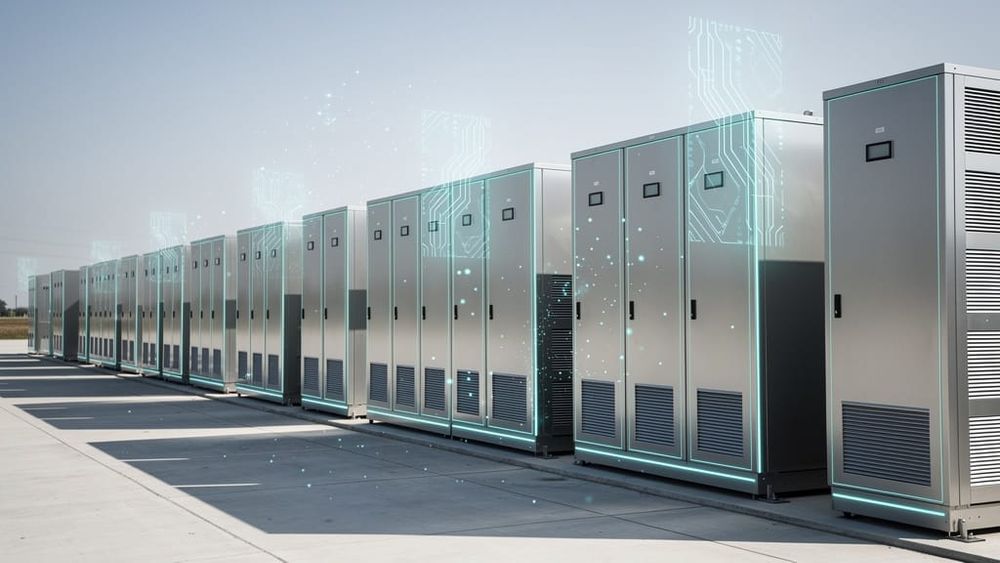
Form Energy has a utility-scale iron-air system already operating with Georgia Power, and the company has since built out a pipeline of tens of gigawatt-hours of additional projects. A separate, even larger effort in Europe recently committed to a full gigawatt-hour of iron-air storage, one of the largest long-duration storage projects announced anywhere to date. The tradeoff for iron-air's low cost is size and speed, an iron-air battery is significantly bulkier per unit of stored energy than lithium, and it charges and discharges much more slowly, which makes it a poor fit for a home garage but a strong fit for a utility trying to store solar or wind power across multiple cloudy or windless days.
This matters for homeowners less as something to install directly, and more as another sign of how differently the overall grid storage picture is starting to look. A utility with access to genuinely inexpensive, multi-day storage is better positioned to smooth over the kind of extended supply gaps that have historically strained the grid during extreme weather, complementing the fast, responsive role lithium batteries play at the substation and home level.
The Hardware Stack:
Form Energy: A battery manufacturer operating one of the first utility-scale iron-air battery deployments in the United States, with a growing project pipeline.
Ore Energy: A battery developer behind one of the largest announced iron-air storage projects in Europe, aimed at multi-day grid support.
Tesla Megapack: A lithium-based grid battery representing the faster-response technology that iron-air systems are meant to complement rather than replace.
Vulnerability Score
No awareness of grid-level storage diversity: Homeowners generally assume all grid batteries are the same lithium technology used in home systems, missing how differently long-duration technologies like iron-air actually function.
Continued exposure to multi-day supply gaps: A regional grid without access to long-duration storage remains more exposed to extended periods of low renewable output than one with iron-air or similar technology in its mix.
No distinction between home and grid storage needs: Confusing what makes sense for a home battery, fast response, compact size, with what makes sense at grid scale can lead to unrealistic expectations about either technology.
What This Means for the Bigger Storage Picture
Iron-air and similar long-duration technologies aren't something a homeowner buys, but their emergence is a meaningful piece of context for understanding how the grid overall is getting more resilient to extended weather events, not just brief demand spikes. It's a complement to, not a replacement for, the lithium batteries already discussed at the home, substation, and EV level.
For anyone following how the broader grid is evolving, this is one of the more interesting developments worth watching, a genuinely different battery chemistry finding a real, growing role specifically because it's good at exactly what lithium isn't.
Written by Mason Vance
One mile from Elon, and almost nobody owns it. (Sponsored by Freedom Financial Research)