
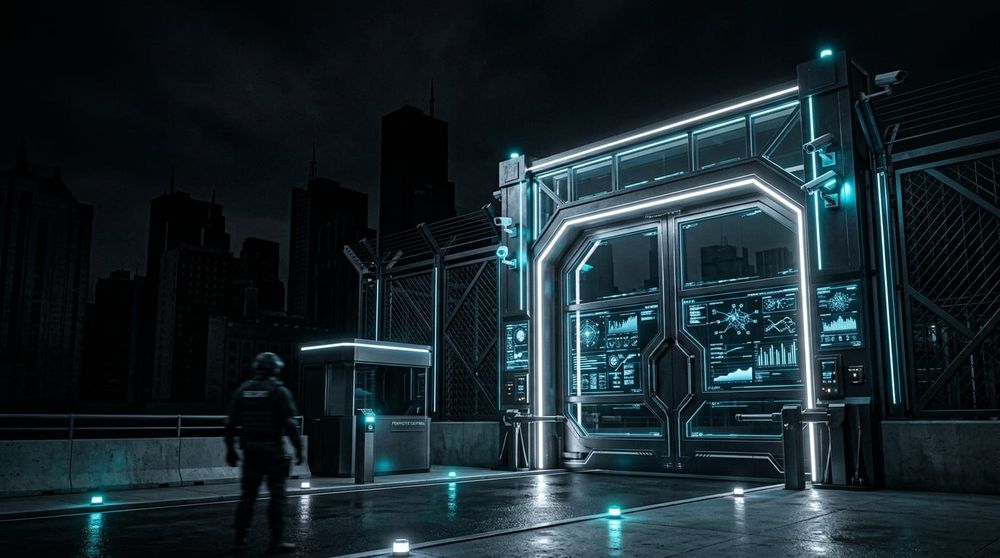
Massive data centers are drawing unprecedented power loads from a grid that was never engineered to support them, creating structural instability that utility operators are managing reactively rather than resolving. Estate owners who understand this dynamic are not waiting for municipal solutions that are years away.

The Industrial Power Drain: Shielding Your Estate From Municipal Disruption
A quiet but consequential shift is placing new stress on national power infrastructure. Large-scale data centers are drawing enormous and continuous electricity loads from utility networks that were engineered for a fundamentally different demand profile. Federal grid monitors have issued alerts following sudden voltage instability events triggered when major computing facilities cycled down to avoid minor power faults, cascading effects that demonstrate how fragile the balance between industrial demand and residential supply has become. Paper wealth cannot substitute for physical infrastructure, and no financial instrument keeps the lights on when municipal power fails. The estate owners building private generation capacity now are not responding to speculation - they are responding to documented grid conditions that utility operators themselves acknowledge cannot be resolved quickly.
The Paper vs. Physical Reality: Hardening Your Infrastructure
The structural problem is not a temporary capacity gap that routine investment will close. Severe lead times for heavy-duty transformers, persistent copper supply constraints, and the engineering complexity of integrating volatile industrial loads into grids designed for predictable residential demand are combining to create conditions that will take years to normalize. Grid operators are attempting to balance these loads using frameworks built for a prior era of demand, and the instability that results from industrial loads that behave more like generation assets than consumption assets is genuinely difficult to manage with existing tools.
For a family estate, the practical consequences include exposure to forced load shedding, extended outage events, and cascading failures of security systems, climate control, and water infrastructure when grid power becomes unreliable. The calculation is straightforward: financial assets are operationally useless during an extended blackout without the underlying physical hardware. Infrastructure liberty means removing your property from dependence on municipal supply decisions that are increasingly driven by industrial demand dynamics, over which your household has no influence.
Vulnerability Score for a standard estate without private generation:
- Full grid dependency with no continuity during extended or forced outage events
- Security perimeters and access systems fail within hours of power loss
- Climate control and water pump systems go offline without grid power
- No buffer against voltage instability events that damage connected equipment
- Procurement lead times for generation equipment have extended considerably, making late decisions costly.
The Estate Reserve Matrix: Your Autonomy Blueprint
Achieving genuine system isolation requires a layered architecture rather than a single backup generator. The components below work as an integrated system - each serving a distinct function in maintaining continuous estate operation independent of municipal supply.
- Generac heavy-duty multi-fuel standby systems: primary baseload generation configured for extended continuous operation during deep grid outage events, with multi-fuel flexibility reducing dependence on any single supply source.
- Tesla Powerwall commercial-grade battery banks: the Reserve Vault layer that captures excess generation, buffers sudden load spikes, and provides seamless transition power when the grid supply drops without requiring generator startup time.
- Schneider Electric smart monitoring hubs: command logic that manages load balancing, automates the island transition when grid conditions deteriorate, and provides real-time visibility into system status without manual intervention.
- Aquasana industrial-grade filtration arrays paired with dedicated well pumps: water security infrastructure that maintains clean water access independently of grid power across extended outage windows.
- Whole-house surge protection systems: a defense layer that blocks voltage spikes from industrial grid instability events from reaching and damaging the sensitive electronics and appliances that modern estate systems depend on.
Authority Uptime: Securing Your Legacy
Authority uptime - the continuous operation of security gates, communications infrastructure, and life-support systems - is the practical standard against which estate resilience should be measured. An estate that maintains full operational capability when municipal power fails is not a luxury configuration. It is a straightforward response to documented infrastructure conditions that are moving in a predictable direction.
The families building these systems now are making a timing decision as much as an infrastructure decision. Generation and storage equipment procurement windows have extended considerably, meaning that the protection a system provides is only available after the lead time required to acquire and install it. Decisions made during a crisis provide no near-term protection. The physical infrastructure secured before conditions deteriorate further is what actually stands between the estate and the municipal grid instability that utility operators are already managing reactively.
The public grid will continue absorbing industrial demand pressure that its engineering was not designed to handle. The only variable within an estate commander's control is the property's resilience.