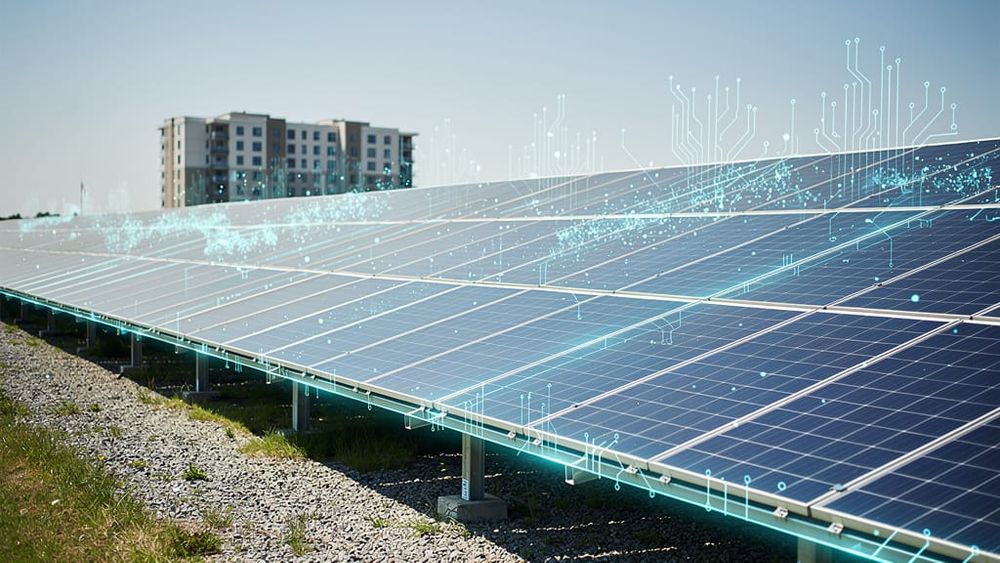
Rooftop solar has always had a built-in requirement: a roof to put it on, and usually one you own. A growing number of households are getting a version of the same savings without any panels touching their own home at all, through a subscription to a solar farm somewhere else entirely.
How Community Solar Actually Works
Community solar lets someone subscribe to a share of a local solar farm's output, and in return they receive credits on their regular electricity bill based on the energy their share generates. No installation happens at the subscriber's home, no roof access is needed, and renters or condo owners who could never install their own system become eligible in exactly the same way as a homeowner. Most current programs use a simple subscription model with no upfront cost, and subscribers typically see bill savings in the range of 5 to 20 percent depending on the state and program.
The market has grown enough that states are now shaping who benefits most from it. A number of states, including Illinois, New York, and Massachusetts, require a portion of community solar capacity to specifically serve low-to-moderate income households, with enhanced savings that can run well above the standard discount for households that qualify. New York, California, and Illinois currently lead the country in program availability and subscriber access.
The trade-off compared with owning a personal system is straightforward: a community solar subscriber gets a modest, predictable bill discount without any of the upfront cost, maintenance responsibility, or roof suitability requirements, but also doesn't get backup power during an outage, since the credits apply to the regular grid connection rather than powering the home directly. It's a genuinely different tool solving a different problem than a home battery or rooftop system, aimed specifically at bill savings and access rather than resilience.
The Hardware Stack:
Arcadia: A community solar subscription platform that connects households to local solar farms and manages the bill-credit process.
Solstice: A community solar service focused specifically on expanding access for renters and low-to-moderate income households.
NYSERDA-administered community solar projects: State-supported community solar farms in New York offering subscription access to residents without their own rooftop option.
Vulnerability Score
No rooftop access: Renters, condo owners, and anyone with a shaded or structurally unsuitable roof have historically had no direct path to solar savings without community solar as an option.
No awareness of income-qualified programs: Many eligible low-to-moderate income households aren't aware that some states offer meaningfully larger community solar discounts specifically for them.
No backup power benefit: A community solar subscription provides bill savings but no protection during a power outage, a distinction worth understanding clearly before assuming it replaces backup power planning.
What This Means for Anyone Who Can't Install Rooftop Solar
Community solar isn't a substitute for a home battery or rooftop system when resilience is the goal, but it's a legitimate way to participate in the savings side of the solar transition for the large number of households that simply can't put panels on their own roof.
Anyone curious should check program availability through their state's energy office or a community solar platform directly, since availability, savings percentage, and income-qualified options vary significantly from one state to the next.
Written by Mason Vance